
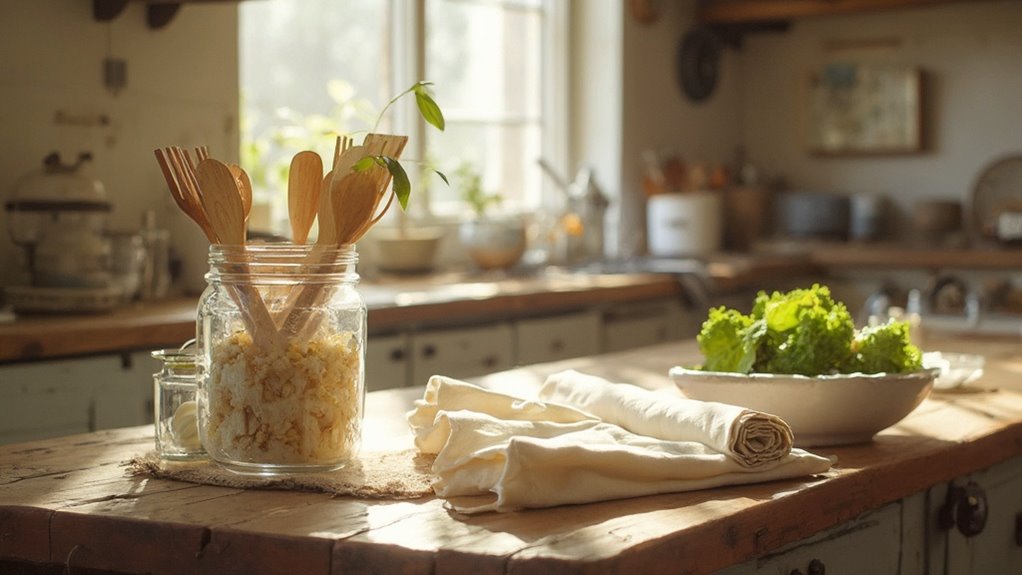
Eco-friendly kitchen craft ideas serve as your gateway to sustainable living whilst reducing household waste and expenses. You'll transform everyday items into functional resources, from converting glass jars into storage solutions to crafting reusable produce bags from old textiles. These creative projects not only minimise your environmental footprint but also foster mindful consumption habits and resourcefulness. By embracing these practical alternatives, you'll discover countless ways to enhance your kitchen's sustainability journey.
Understanding the Impact of Kitchen Waste
While many of us focus on reducing waste in other areas of our lives, the kitchen remains one of the most significant sources of household environmental impact.
You're likely unaware that your kitchen habits contribute substantially to your overall environmental footprint, particularly through food waste.
When you discard unused produce, out-of-date pantry items, or leftover meals, you're not just wasting food – you're squandering the resources utilised to grow, transport, and store these items.
The decomposition of food waste in landfills releases methane, a potent greenhouse gas that accelerates climate change.
Moreover, the plastic packaging, disposable containers, and single-use items commonly found in kitchens further compound the problem.
Understanding these impacts is essential for making informed decisions about your kitchen practices and adopting more sustainable habits.
Benefits of DIY Eco-Kitchen Crafts
As you explore sustainable alternatives for your kitchen, DIY eco-kitchen crafts offer multiple environmental and practical advantages. You'll discover that creating your own eco-friendly materials not only reduces waste but also establishes a deeper connection with sustainable practises in your daily life.
| Benefit Category | Personal Impact | Environmental Impact |
|---|---|---|
| Cost Savings | Reduced expenses | Less packaging waste |
| Creativity | Skill development | Resource optimisation |
| Health | Non-toxic options | Fewer chemicals released |
| Education | Learning sustainability | Community awareness |
| Connection | Kitchen mindfulness | Environmental stewardship |
When you craft your own kitchen solutions, you're actively participating in waste reduction whilst developing valuable skills. Your commitment to eco-friendly materials transforms your kitchen into a learning space where sustainable practises become second nature. This hands-on approach strengthens your role in environmental conservation whilst creating a more meaningful relationship with your daily kitchen activities.
Essential Materials for Green Kitchen Projects
Building your eco-friendly kitchen projects starts with selecting the right sustainable materials.
You'll need to gather natural fibres like cotton, hemp, and bamboo for crafting reusable tea towels and food wraps. Reclaimed timber, particularly from old furniture or pallets, serves as an excellent base for creating chopping boards and utensil holders.
For your eco-friendly tools, consider implementing natural brushes with wooden handles, stainless steel scourers, and biodegradable cleaning implements.
You'll want to stock up on beeswax, organic cotton twine, and plant-based adhesives for various projects. Glass containers from your recycling bin can be transformed into storage solutions, whilst fallen branches can become unique hanging racks.
Remember to source locally when possible, reducing your project's carbon footprint whilst supporting regional suppliers.
Transforming Glass Jars Into Storage Solutions
Once discarded glass jars have been thoroughly cleaned and sanitised, they become versatile vessels for an array of kitchen storage solutions.
You'll find these repurposed containers ideal for preserving dried herbs, storing bulk grains, or organising small kitchen implements.
Transform your jars into functional art through thoughtful jar decoration techniques. You can etch designs into the glass surface, apply natural twine wrapping, or create custom labels using recycled paper.
Each container serves as both a practical storage unit and an aesthetic element in your sustainable kitchen space.
Consider grouping similar-sized jars together to create cohesive storage systems.
You'll maximise vertical space by stacking compatible containers, whilst the transparent nature of glass allows you to easily monitor inventory levels.
This mindful approach to storage solutions helps reduce plastic consumption whilst maintaining an organised, eco-conscious kitchen.
Creative Ways to Repurpose Kitchen Textiles
When kitchen textiles begin showing signs of wear, they present numerous opportunities for creative repurposing rather than disposal. One finds that old tea towels, tablecloths, and serviettes can transform into practical items through thoughtful textile upcycling.
Consider converting worn tea towels into reusable produce bags by adding simple drawstrings, or craft them into washable cleaning cloths for eco-friendly household maintenance.
Those cherished but damaged vintage tablecloths can find new life as protective wraps for delicate glassware or fabric covers for compost bins.
Don't overlook smaller fabric scraps – they're perfect for creating natural food wraps when treated with beeswax, or can be woven into practical pot holders.
Sustainable Alternatives to Single-Use Items
The shift from disposable to reusable items represents a fundamental step in creating an environmentally conscious kitchen. You'll find that replacing single-use plastics with biodegradable utensils made from bamboo or cornstarch can greatly reduce your ecological footprint whilst maintaining functionality in your daily cooking routine.
Consider investing in a collection of reusable containers in various sizes for storing leftover food and pantry items. Glass jars, stainless steel containers, and beeswax wraps offer durable alternatives to cling film and disposable storage bags.
You'll discover that these sustainable choices not only preserve your food effectively but also eliminate the guilt of contributing to landfill waste. By embracing these eco-conscious alternatives, you're nurturing both your household's wellbeing and the planet's health for generations to come.
Building Your Own Kitchen Compost System
Building an effective kitchen compost system starts with selecting a suitable container that balances convenience with proper decomposition conditions.
You'll want to choose a well-ventilated bin with a tight-fitting lid to control moisture and prevent unwanted pests whilst allowing beneficial microorganisms to thrive.
Understanding composting basics is essential for success.
Begin by layering "brown" materials like dried leaves or paper with "green" organic materials such as fruit peel and vegetable scraps.
You'll need to maintain a ratio of roughly three parts brown to one part green.
Monitor your compost's moisture level – it should feel like a wrung-out sponge.
Turn your mixture weekly using a small garden fork to accelerate decomposition and prevent odours.
Within months, you'll transform kitchen waste into nutrient-rich soil for your plants.
Natural Cleaning Solutions From Kitchen Scraps
Making your own cleaning solutions from kitchen scraps offers another powerful way to minimise waste whilst maintaining an eco-conscious home.
You'll discover that common kitchen remnants can transform into potent natural disinfectants, supporting both your household's cleanliness and environmental stewardship.
- Citrus peels steeped in vinegar solutions create powerful all-purpose cleaners rich in d-limonene, nature's degreasing compound.
- Coffee grounds serve as an abrasive scrub for stubborn pots and pans whilst neutralising odours.
- Leftover lemons combined with salt make an effective copper and brass polish.
- Used tea bags can clean mirrors and glass surfaces, leaving them streak-free.
- Cucumber peelings remove tarnish from stainless steel fixtures and freshen sinks.
These biodegradable cleaning alternatives eliminate the need for harsh chemicals whilst giving kitchen waste a second purpose in your sustainable home.
Cost Savings Through Kitchen Upcycling
By transforming everyday kitchen items into functional tools and décor, you'll discover significant cost savings whilst reducing your environmental footprint.
When you repurpose glass jars into storage containers or turn wooden crates into upcycled furniture, you're not just saving money – you're participating in a meaningful conservation effort.
Your kitchen offers endless possibilities for cost-effective materials that would otherwise end up in rubbish tips.
Transform wine bottles into elegant vases, create herb planters from tin cans, or fashion drawer organisers from cardboard boxes.
You'll find that many shop-bought organising solutions can be replicated using items you already have.
Frequently asked questions
How Long Do Homemade Eco-Friendly Kitchen Crafts Typically Last Before Needing Replacement?
Your homemade eco-friendly kitchen crafts can last six months to several years, depending upon durability factors and maintenance requirements. You'll extend their life through proper cleaning, gentle use, and regular upkeep of natural materials.
Can Eco-Friendly Kitchen Projects Affect Indoor Air Quality?
Using sustainable materials in your DIY kitchen projects will help improve air quality, as they emit fewer indoor pollutants compared to conventional items. They're better for your health and create a cleaner breathing environment in your home.
Are DIY Kitchen Craft Materials Safe for Households With Pets?
Keep your furry friends away from adhesives, small bits and toxic finishes whilst working on DIY kitchen projects. You'll need to carefully select pet-safe materials and maintain strict crafting precautions during your DIY kitchen endeavours.
What Certifications Should I Look for When Choosing Eco-Friendly Craft Supplies?
Look for sustainability certifications such as FSC, GOTS and Green Seal. Do check for verified eco-label standards like Energy Star or EcoLogo on your craft supplies.
How Do Seasonal Changes Impact the Effectiveness of Natural Kitchen Solutions?
Throughout the seasons, one notices that seasonal ingredients affect natural preservation methods in distinct ways. In summer, shorter fermentation times are necessary, whilst winter's cooler temperatures allow for lengthier, more controlled preservation processes.