
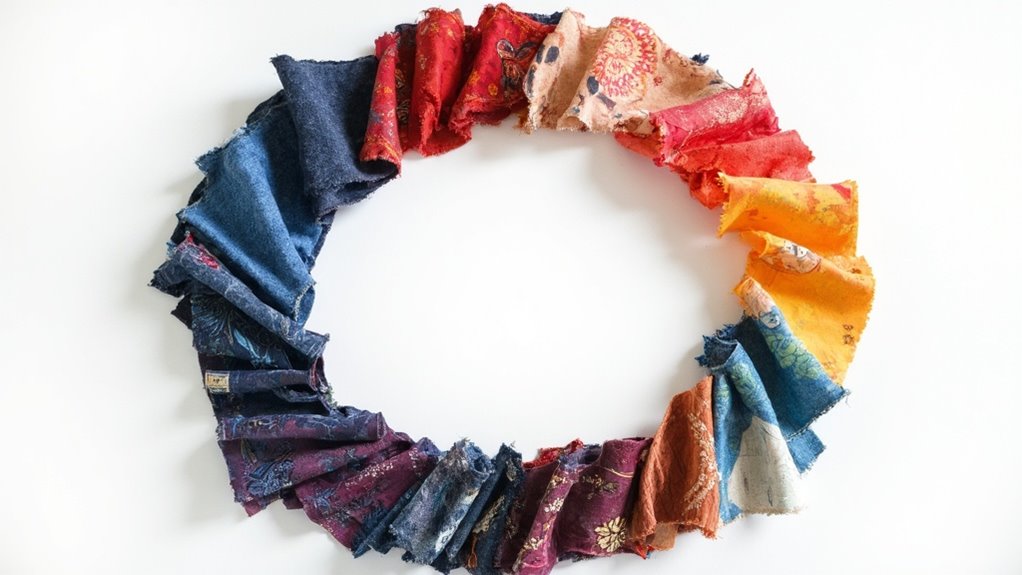
Transform your fashion business into a circular model with these essential strategies: design for longevity utilising sustainable materials, implement take-back programmes, offer repair services, create resale marketplaces, build eco-friendly supply chains, adopt digital tracking, integrate rental options, establish collection systems, measure impact metrics, and foster customer education. Your commitment to these practices won't just reduce environmental impact—it'll revolutionise how you approach fashion's entire lifecycle. The journey to true circularity unfolds through each thoughtful step.
Understanding the Circular Fashion Ecosystem
What exactly makes fashion truly circular? You're looking at a complete fashion lifecycle where every element flows in a continuous loop of renewal and rebirth. In a circular economy, your clothing's journey doesn't end at disposal – it transforms.
When you embrace circular fashion, you're participating in a system built on sustainable materials and eco-friendly practises. Design innovation plays an essential role, as creators must envision products that can be easily dismantled and repurposed.
Ethical sourcing guarantees your garments begin their journey responsibly, whilst brand transparency lets you track their entire lifecycle. Your consumer awareness drives waste reduction efforts, pushing the industry towards better environmental impact management.
Think of it as nature's own model – where nothing is wasted, and everything serves a purpose in the greater ecosystem.
Designing for Product Longevity and Durability
Whilst fast fashion promotes disposable trends, designing for longevity forms the cornerstone of circular fashion principles. One must embrace sustainable materials that withstand time's test, from organic cotton to recycled polyester that maintains its integrity through multiple wear cycles.
Consider how nature's resilience can inspire design innovation. Just as a tree's growth rings tell its story of endurance, garments should evolve gracefully with wear.
One ought to incorporate reinforced seams, quality zips, and durable buttons that won't fail after a few uses. Choose fabrics that resist pilling and fading, much like leaves adapt to harsh weather conditions.
Implementing Take-Back Programs and Collection Systems
As fashion brands embrace circular models, establishing efficient take-back programmes becomes essential for closing the resource loop. One needs to design collection systems that make it easy for customers to return used garments whilst implementing consumer incentives that drive participation.
| Programme Component | Benefits | Implementation Steps |
|---|---|---|
| Drop-off Locations | Convenient access points | Install bins at retail stores |
| Mail-back Systems | Direct-to-facility returns | Provide prepaid postage labels |
| Mobile Collections | Community engagement | Schedule neighbourhood pickups |
| Digital Platform | Track return metrics | Develop user-friendly app |
| Reward Structure | Boost participation | Offer store credits/discounts |
Consider partnering with logistics providers who specialise in textile collection and sorting. One should establish clear guidelines for acceptable items and communicate these effectively to customers. Remember to track return rates and material quality to optimise your programme's effectiveness.
Developing Repair and Maintenance Services
Once fashion brands establish a circular model, offering repair and maintenance services becomes an essential component for extending product lifespans.
Through dedicated repair workshops and online maintenance tutorials, you'll empower your customers to care for their garments sustainably. Building a thorough repair ecosystem helps preserve the environment whilst nurturing brand loyalty.
- Train your staff to perform expert repairs on zips, buttons, seams, and fabric damage
- Create engaging video maintenance tutorials showing proper washing, storing, and care techniques
- Host in-store repair workshops where customers learn basic mending skills
- Partner with local tailors and craftspeople to expand your repair network
- Develop an online booking system for convenient repair service scheduling
Creating Resale and Second-Hand Marketplaces
Beyond repair services, establishing a robust resale marketplace represents the next frontier in circular fashion.
You'll need to understand consumer behaviour patterns and second-hand trends to create successful resale platforms that resonate with your audience. Start by developing clear pricing strategies that reflect both item condition and market demand.
Managing your marketplace challenges requires careful inventory management and strategic brand collaborations.
You'll want to implement marketing tactics that highlight the environmental impact of choosing pre-loved fashion. Build engaged online communities where customers can share styling tips and sustainability education resources.
Don't forget to track metrics like user engagement and resale volumes to optimise your platform's performance.
Establishing Material Recovery and Recycling Processes
Whilst establishing a circular fashion model requires multiple components, implementing robust material recovery and recycling processes forms its backbone.
One must embrace material innovation and advanced recycling technologies to create a truly sustainable system.
- Set up collection points where customers can easily return worn-out garments
- Partner with recycling facilities that specialise in textile waste processing
- Invest in technology that can separate blended fibres effectively
- Develop protocols for sorting materials by fibre type and quality
- Create guidelines for converting recovered materials into new textiles
Building Sustainable Supply Chain Partnerships
To establish a truly circular fashion model, brands must forge strategic partnerships with environmentally conscious suppliers, manufacturers, and logistics providers throughout their supply chain.
You'll need to prioritise supply chain transparency by selecting partners who share your commitment to sustainability and ethical sourcing. Look for suppliers who can provide detailed documentation of their environmental practices, working conditions, and material origins.
When you're evaluating potential partners, consider their waste reduction initiatives, energy consumption patterns, and willingness to innovate in sustainable processes.
Build long-term relationships with partners who'll collaborate on developing closed-loop systems. You should regularly assess their performance through sustainability metrics and work together to identify areas for improvement.
Remember that your partners' values and practices directly impact your brand's environmental footprint and credibility in the circular fashion ecosystem.
Adopting Digital Product Passports and Tracking
Digital traceability forms the backbone of circular fashion, and implementing product passports and tracking systems enables one to monitor each garment's lifecycle journey.
Digital traceability benefits extend beyond simple inventory management, creating a transparent connection between brands and their conscious consumers.
- Scan QR codes to access detailed material origins and manufacturing processes
- Track each garment's environmental impact throughout its lifecycle
- Enable seamless resale and recycling through verified authentication
- Implement consumer engagement strategies through interactive storytelling
- Build trust by sharing real-time sustainability metrics
Integrating Rental and Subscription Models
Whilst consumers increasingly prioritise access over ownership, rental and subscription models have emerged as powerful drivers of circular fashion. One finds that integrating these models into your business strategy can greatly extend product lifecycles whilst creating recurring revenue streams.
To implement rental platforms effectively, one must develop robust cleaning and maintenance protocols that guarantee garments remain in pristine condition between users.
Consider partnering with established rental platforms or creating your own digital marketplace where customers can easily browse and temporarily access your collection.
For subscription services, focus on curating personalised selections that align with your customers' evolving style preferences.
One ought to implement a seamless rotation system that allows subscribers to refresh their wardrobe regularly whilst maintaining quality control and efficient logistics throughout the process.
Measuring Circular Impact and Success Metrics
Whilst traditional business metrics focus on sales and revenue, measuring circular fashion success requires a more extensive framework that evaluates environmental and social impacts.
Your impact assessment should track both quantitative and qualitative success indicators across your entire circular fashion ecosystem.
Consider tracking these essential metrics to gauge your circular model's effectiveness:
- Product lifecycle duration and number of use cycles
- Volume of materials salvaged from landfills and reintegrated
- Carbon footprint reduction through circular practices
- Customer participation rates in take-back programmes
- Social impact scores from fair labour and community initiatives
You'll want to establish baseline measurements and set progressive targets that align with your sustainability goals.
Regular monitoring of these metrics helps you identify areas for improvement and demonstrate your brand's commitment to circular principles.
Frequently asked questions
How Can Small Fashion Brands Afford to Transition to Circular Models?
Materials costs can be reduced through careful local sourcing and partnering with fellow small brands. Begin by educating your customers about repair services, whilst building a community that values sustainable fashion through clothing swaps and hire services.
What Legal Requirements Must Be Met When Reselling Used Clothing?
Compliance with waste management regulations, honouring consumer rights, guaranteeing proper sanitisation, and disclosing any defects are essential requirements. Check local resale permits, maintain accurate labelling, and adhere to health department guidelines for secondhand goods.
How Do Weather Conditions Affect Clothing Collection Bins for Recycling Programs?
Rain and snow are particularly damaging to garments in collection bins, whilst extreme temperatures often degrade textiles and fibres. One should seek out covered, weather-resistant collection points to maintain recycling efficiency. Harsh weather conditions have a significant impact on the process, reducing the effectiveness of clothing recycling programmes.
Which Certifications Validate a Brand's Circular Fashion Practices?
Major certification bodies such as Cradle to Cradle, Global Recycled Standard and B Corp validate circular practices. These sustainability standards ensure your favourite brands genuinely embrace closed-loop systems and responsible material sourcing.
Can Circular Fashion Models Work in Regions With Limited Digital Infrastructure?
Yes, you can adapt circular fashion models through community engagement rather than relying solely on digital tools. By fostering local networks and building digital literacy gradually, you will create sustainable systems that honour traditional practices.