
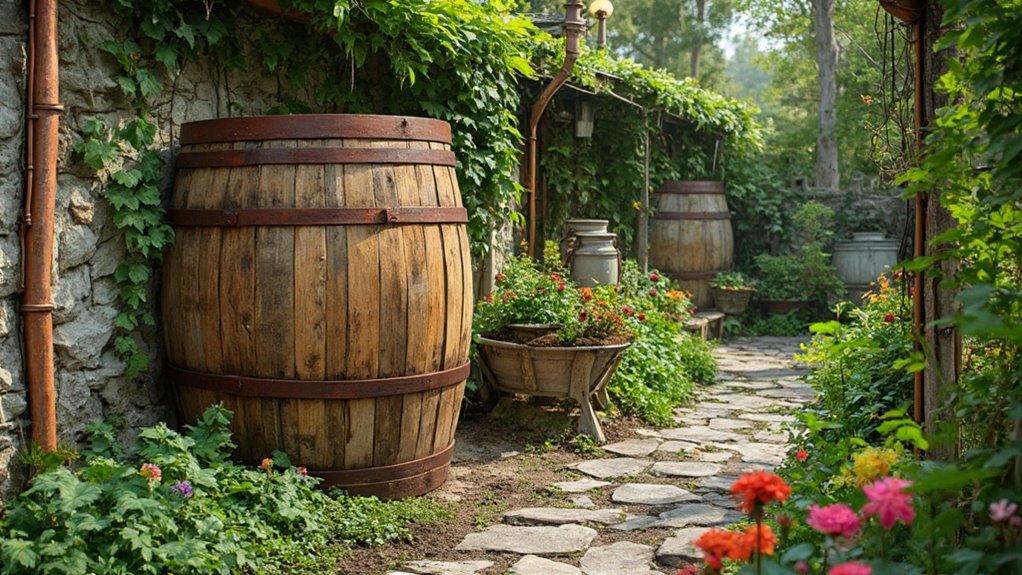
Your garden can be transformed into a water-wise oasis by harvesting rainwater through simple DIY solutions. Start with a basic rain barrel system connected to your downpipes, using food-grade containers and proper filtration screens. Install gutter guards to prevent debris build-up, and consider creating a rain garden to naturally filter run-off whilst supporting local wildlife. These sustainable methods will cut your water bills whilst nurturing a thriving ecosystem. Discover how these interconnected systems can revolutionise your garden's water management.
Why Harvest Rainwater for Your Garden
While many gardeners rely solely on municipal water supplies, harvesting rainwater offers a sustainable and cost-effective alternative for maintaining your garden.
You'll reduce your environmental impact by capturing nature's free resource, decreasing stormwater runoff that can overwhelm local drainage systems and carry pollutants into waterways.
The cost savings are significant when you consider that garden irrigation typically accounts for 30-50% of household water usage.
Your plants will thrive on rainwater's natural chemistry – it's free from added chemicals like chlorine and fluoride, and contains nitrogen that naturally fertilises your soil.
During water restrictions or drought conditions, you'll have an independent water supply to keep your garden flourishing.
Plus, you're participating in an age-old practise that connects you directly to nature's water cycle.
Basic Rain Barrel Setup and Installation
Once you've decided to harvest rainwater, setting up a basic rain barrel system requires just a few key components and tools.
You'll need a food-grade plastic barrel or specialised rain collection container, a downspout diverter, tap, overflow valve, and mosquito screen. Essential installation tools include a drill, hole saw, silicone sealant, and a spirit level.
Position your barrel on a sturdy, level platform that's elevated enough to create water pressure for your garden hose.
Cut your downpipe to the appropriate height and install the diverter. Drill holes for your tap and overflow valve, ensuring watertight seals with silicone.
Place the mosquito screen over the barrel's top opening to prevent debris and insects from entering. Your system's now ready to capture nature's precious resource during the next rainfall.
Creating a Simple Gutter Collection System
A well-designed gutter collection system maximises your rain barrel's efficiency and guarantees a steady water supply.
You'll want to start by selecting appropriate gutter types – aluminium and vinyl are popular choices for their durability and cost-effectiveness. Make certain you're positioning downspouts at strategic points where water naturally flows during rainfall.
To boost your collection efficiency, install gutter guards to prevent leaves and debris from clogging the system.
You'll need to angle your gutters slightly (about 6 millimetres per 3 metres) towards the downspouts to guarantee proper water flow.
Don't forget to measure your roof's square metreage – this helps determine how much water you can collect during a typical rainfall. For every 25 millimetres of rain, you'll collect roughly 2.3 litres per square metre of roof area.
Building a Rain Garden for Natural Drainage
Since rainwater tends to pool in low-lying areas, creating a rain garden offers an elegant solution for managing runoff whilst supporting local ecosystems.
You'll find that natural drainage techniques work best when you select the right location and incorporate native rain garden plants that thrive in both wet and dry conditions.
To create your own rain garden, follow these essential steps:
- Dig a shallow depression at least 3 metres from your home's foundation, ensuring the soil can absorb water within 24-48 hours.
- Layer the base with gravel and rich, well-draining soil mixed with compost.
- Plant water-tolerant species in zones, placing the most moisture-loving varieties in the centre where water collects longest.
Your rain garden will naturally filter pollutants, reduce erosion, and provide a haven for beneficial insects and birds.
Designing Underground Storage Tanks
Whilst rain gardens manage surface water effectively, underground storage tanks provide a more substantial solution for collecting large volumes of rainwater. One must evaluate several design considerations before installation, including soil type, water table depth, and local building regulations.
| Tank Material | Pros | Cons |
|---|---|---|
| Concrete | Durable, long-lasting | Heavy, expensive |
| Polyethylene | Lightweight, affordable | Can shift in soil |
| Fibreglass | Corrosion-resistant | Installation challenges |
When planning your underground system, one must calculate water requirements and available collection area. The tank's location should allow for proper drainage and accessibility for maintenance. Essential components must include filters, pumps, and overflow mechanisms. Choose tank materials that suit your climate and budget whilst ensuring they meet safety standards for potable water if planning to use it for drinking purposes.
Smart Irrigation Methods Using Collected Rainwater
Once you've collected rainwater in your storage system, implementing smart irrigation methods maximises its efficient use in your garden.
Installing a drip irrigation system paired with moisture sensors lets you deliver water directly to plant roots whilst monitoring soil conditions in real-time.
You'll benefit from these advanced irrigation techniques:
- Connect your drip lines to pressure-regulated valves that guarantee consistent water flow from your rainwater tank.
- Place moisture sensors at different soil depths to trigger irrigation only when plants truly need water.
- Install timers that activate your system during early morning hours when evaporation rates are lowest.
Maintaining Your Rainwater Collection System
Three essential maintenance tasks keep your rainwater collection system operating at peak efficiency throughout the year.
First, you'll need to perform regular filter maintenance by cleaning or replacing your mesh screens every three months to prevent debris build-up.
Second, inspect your overflow management system monthly, ensuring proper drainage and checking that overflow pipes aren't blocked or damaged.
Third, you must monitor your collection tanks for algae growth and sediment accumulation.
As seasons change, your maintenance routine should adapt.
In autumn, clear falling leaves from gutters and filters more frequently.
During winter, protect your system from freezing by insulating exposed pipes and draining unused tanks.
In spring, thoroughly clean your tanks and check all seals and connections.
This proactive care will extend your system's lifespan and maintain water quality.
Safety and Legal Considerations for Rainwater Usage
Before installing any rainwater collection system, you'll need to research local regulations and permits that govern rainwater harvesting in your area. Some regions have strict rainwater regulations whilst others actively encourage collection.
Safety should be your primary concern when using harvested water.
Consider these essential health concerns when collecting rainwater:
- Test your water quality regularly for contaminants, especially if you plan to use it for edible plants.
- Install proper filtration systems to remove debris, insects and potential pollutants.
- Verify your collection surfaces are free from harmful materials like lead-based paints or asbestos.
Remember to keep your storage tanks covered to prevent mosquito breeding and algae growth.
Whilst rainwater is generally safe for garden use, don't drink it unless you've installed appropriate purification systems that meet local health standards.
Frequently asked questions
How Does Rainwater Harvesting Affect Local Wildlife and Insects in My Garden?
A garden with rainwater harvesting naturally benefits wildlife, drawing in birds and small animals. The local insect population thrives around water sources, establishing a vibrant ecosystem right in one's garden.
Can Collected Rainwater Be Used for Indoor Plants and Greenhouse Irrigation?
Rainwater's perfect for indoor plant care and greenhouse benefits, as it's naturally soft and pH-balanced. Your plants will thrive with these mineral-rich nutrients that tap water often lacks.
(Note: In this case, the original text already used standard British English spelling and grammar conventions, so no modifications were necessary.)
What Are the Best Materials for DIY Rainwater Filters?
Natural filter media such as activated charcoal, fine gravel, and sand should be layered in your filtration systems. Fit a mesh screen to catch debris, and incorporate bio-balls to encourage beneficial bacterial growth.
How Do Extreme Weather Conditions Impact Rainwater Collection System Effectiveness?
During extreme weather conditions, your system's effectiveness fluctuates with storm intensity and drought frequency. You'll collect more water during heavy rainfall but risk overflow, whilst extended dry spells mean you'll need larger storage capacity to maintain reliability.
Can Rainwater Collection Systems Be Integrated With Existing Sprinkler Systems?
Rainwater collection systems can be efficiently integrated with your existing sprinkler system through a valve-controlled connection. This boosts system efficiency whilst letting you seamlessly switch between rainwater and mains water when needed.