
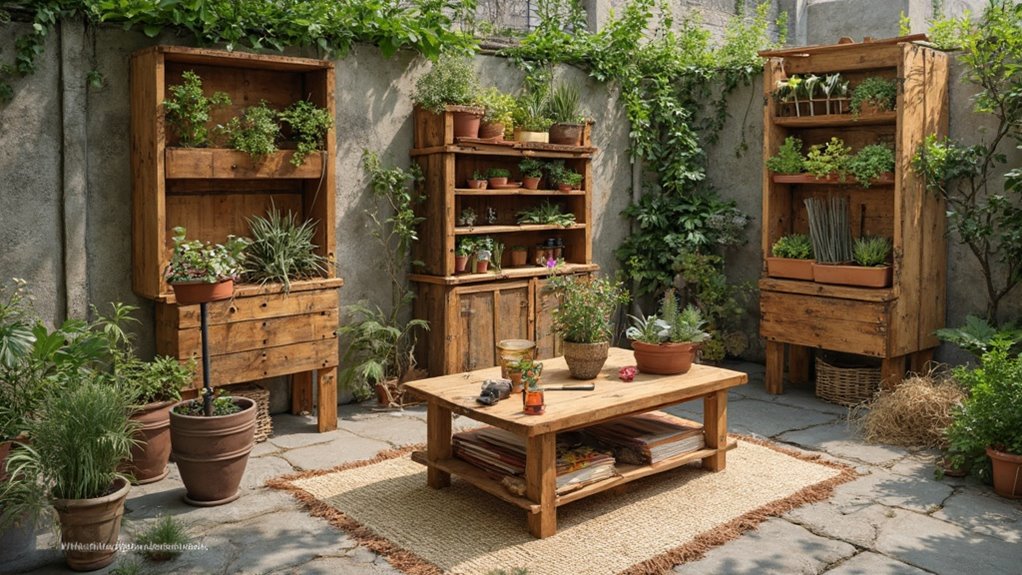
Before transforming discarded pallets into eco-friendly furniture or garden features, you'll need to select safe materials and gather proper tools. Look for pallets with the IPPC heat treatment stamp, avoiding any marked "MB" which indicates chemical treatment. You'll want sturdy work gloves, protective goggles, and basic tools like a crowbar and hammer. After thorough cleaning with a vinegar solution and sanding, your sustainable masterpiece awaits – let's explore the creative possibilities together.
Selecting Safe Pallets for Your Projects
Whilst many pallets are suitable for upcycling projects, you'll need to carefully evaluate each one for safety and contamination risks.
Begin your pallet inspection criteria by looking for the IPPC stamp, which indicates heat treatment rather than chemical treatment. You'll want to avoid pallets marked "MB" (methyl bromide), as these contain harmful chemicals.
When examining safe wood types, select pallets made from hardwoods like oak or maple – they're naturally resistant to rot and insects.
Run your hands along the surface, feeling for splinters or rough patches. Check for any dark stains or unusual odours that might indicate chemical spills.
Don't use pallets that show signs of mould or extensive water damage. If you're unsure about a pallet's history, it's best to give it a miss.
Essential Tools and Safety Equipment
Once you've selected a safe pallet for your project, gathering the proper tools and protective gear will set you up for success.
You'll need sturdy work gloves to protect against splinters and nails, plus safety goggles to shield your eyes from flying wood particles. Keep a crowbar, hammer, and nail puller within reach for dismantling pallets safely.
Essential power tools include a reciprocating saw for cutting through stubborn nails and a power drill for new construction.
Don't forget your dust mask whilst sanding, as old wood particles can irritate your lungs. A stable work surface, like trestles or a solid workbench, provides the foundation for safe pallet breakdown.
Remember to work in a well-ventilated area with plenty of natural light, keeping your workspace free from tripping hazards.
Preparing and Cleaning Used Pallets
Before starting your pallet project, thorough cleaning and preparation are essential steps that guarantee both safety and quality results.
You'll want to start by carefully inspecting each pallet for protruding nails, splinters, and signs of contamination. Gently brush away debris with a wire brush, then wash the timber using warm, soapy water.
For pallet disinfection methods, mix one part white vinegar with three parts water in a spray bottle. Thoroughly coat all surfaces and let the solution penetrate the timber for 20 minutes.
When removing pallet nails that aren't needed, utilise a crowbar and hammer with controlled movements to avoid splitting the timber.
Once clean and dry, sand the surfaces smooth, paying special attention to rough spots and edges. You'll know you're ready to begin when the timber feels silky to your touch.
Creating Indoor Pallet Furniture
With your pallets now cleaned and prepped, the creative journey of crafting indoor furniture begins.
You'll want to start with simpler projects like pallet shelving, which requires minimal cutting and can be mounted directly to your wall joists. These versatile storage solutions naturally showcase both your items and the wood's rustic character.
For a more ambitious project, consider building a pallet settee. You'll need at least four pallets for the base and two for the backrest.
Stack them strategically, ensuring the load-bearing points align perfectly. Don't forget to sand every surface that'll touch skin or fabric – those edges deserve extra attention.
Add castors for mobility and plump cushions to transform the industrial wood into an inviting seating area. Your handcrafted furniture will bring both sustainable style and personal satisfaction to your living space.
Building Outdoor Garden Projects
Outdoor gardens offer endless possibilities for pallet-based projects that harmonise with nature.
You'll find that pallets naturally lend themselves to vertical gardens, where each slat creates perfect rows for herbs and flowering plants. By standing a pallet upright and securing it properly, you're creating an eco-friendly living wall that maximises growing space in even the smallest gardens.
Transform pallets into raised bed planters by laying them horizontally and lining them with landscape fabric. You can customise these pallet planters to grow everything from strawberries to succulents, letting the wood weather naturally to blend with your garden's aesthetic.
When building outdoor projects, remember to select pallets that haven't been chemically treated, ensuring your garden remains truly organic and safe for growing edibles.
Decorative Wall Features Using Pallets
Transforming interior walls into striking focal points becomes effortless when you're working with reclaimed pallets. You'll discover endless possibilities for creating pallet art that reflects your personal style whilst adding organic warmth to your space.
| Project Type | Difficulty | Time Required |
|---|---|---|
| Hanging Garden | Moderate | 3-4 hours |
| Photo Display | Easy | 1-2 hours |
| Geometric Art | Advanced | 5-6 hours |
Break down your pallet carefully, preserving each board's natural character. For wall planters, sand the wood gently to maintain its rustic appeal whilst ensuring splinter-free handling. You'll want to seal the wood, especially for pieces that will house living plants. Create depth by alternating board directions or incorporating different stain colours. Don't forget to secure your creation properly to wall studs – these pieces can be surprisingly heavy once completed.
Sustainable Storage Solutions From Pallets
Creating functional storage from recycled pallets delivers both environmental benefits and practical organising solutions for your home.
When you're looking to maximise your storage space whilst maintaining an eco-conscious lifestyle, pallet organisation systems offer versatile options that blend seamlessly with your existing décor.
- Transform a single pallet into a vertical garden tool rack by adding hooks and small storage bins between the slats.
- Create a modular shelving system by stacking pallets horizontally and adding castors for mobility.
- Design a custom shoe rack with angled shelves cut from pallet wood.
- Build floating storage bins using dismantled pallet boards for a clean, modern look.
You'll find that these sustainable storage solutions not only reduce waste but also add character to your living space whilst keeping your belongings neatly organised and easily accessible.
Frequently asked questions
How Long Does an Upcycled Pallet Furniture Piece Typically Last?
Your upcycled pallet furniture can last 5-10 years when you consider key durability factors like indoor placement and protection from the weather. With proper maintenance, such as regular sealing and cleaning, you'll extend its lifespan considerably. Whilst indoor pieces tend to fare better, those placed in the garden or on the patio require additional weatherproofing to withstand the British climate.
Where Can I Legally Obtain Free Wooden Pallets for DIY Projects?
Wooden pallets are available free of charge from local businesses, warehouses and garden centres – simply enquire first! For safe pallet sourcing, check Gumtree, Facebook Marketplace and recycling resources like Freecycle. Always obtain permission before collecting.
What Types of Paint or Finish Are Safest for Pallet Furniture?
Natural finishes such as linseed oil, beeswax or tung oil are ideal for your pallet projects. For paint, opt for non-toxic, water-based options labelled "zero VOC" to maintain a safe and healthy living space.
Can I Sell My Upcycled Pallet Creations Without Legal Implications?
Check your local council regulations and obtain liability insurance before selling pallet creations. It's sensible to maintain records of where you source pallets and document your safety measures. Ensure you comply with UK trading standards and product safety requirements. If operating as a business, register with HMRC and consider joining a crafters' association for additional protection.
How Much Weight Can a Recycled Pallet Shelf or Table Support?
Your recycled pallet's strength typically supports 450-1,800 kilogrammes when intact, but for furniture, you'll want to limit weight to 45-90 kilogrammes per shelf, ensuring proper weight distribution across support points.