
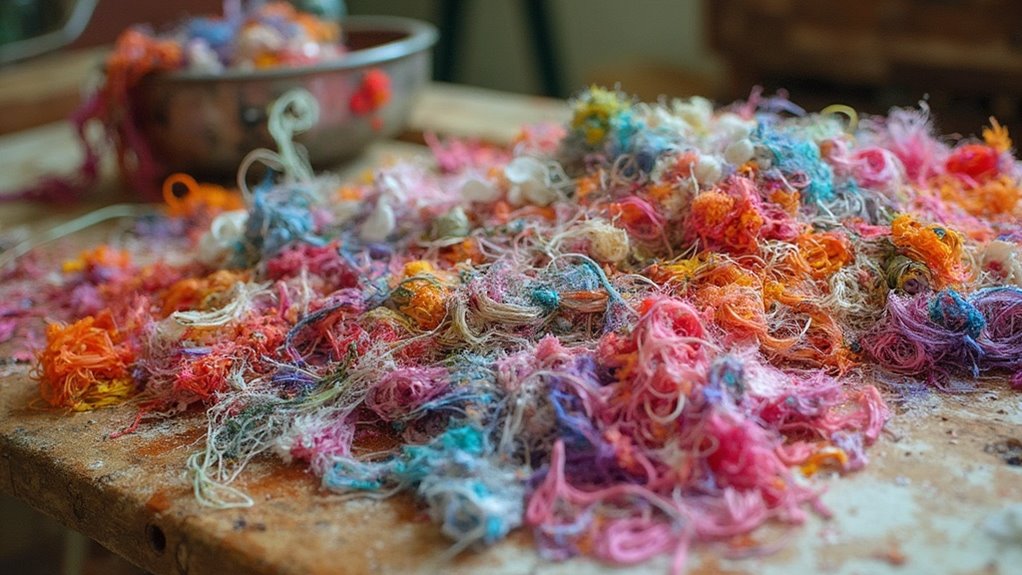
Switch to natural fibres like organic cotton and hemp whilst adopting plant-based dyes to create vibrant, eco-friendly textiles. You'll reduce environmental impact by implementing water recycling systems and filtering wastewater for reuse in your production process. Embrace circular design principles by choosing biodegradable materials and creating easily disassembled products. These sustainable innovations won't just protect the environment – they'll transform your entire approach to textile manufacturing.
Using Natural Fibers and Low-Impact Dyes
Whilst conventional textile production often relies heavily on synthetic materials and harsh chemical dyes, natural fibres and low-impact dyes offer a more environmentally conscious alternative.
One finds that natural fibre benefits extend beyond environmental impact – they're biodegradable, renewable, and often more breathable than their synthetic counterparts. Consider options like organic cotton, hemp, or bamboo for your textile projects.
When it comes to colouring your fabrics, eco-friendly dyes derived from plants, minerals, and other natural sources can create stunning results without harmful chemical runoff.
One discovers that these dyes work particularly well with natural fibres, creating rich, lasting colours that age beautifully. By choosing low-impact dyes, you're protecting waterways and reducing toxic exposure for both textile workers and end users.
Minimizing Water and Chemical Waste
One of the textile industry's greatest environmental challenges lies in its massive water consumption and chemical waste generation. You can make a significant impact by implementing water recycling systems in your production processes.
Start by collecting and filtering wastewater from dyeing and finishing operations, then reuse it for subsequent batches.
To achieve chemical reduction, you'll want to adopt cleaner technologies like enzymatic treatments and plasma processing. These alternatives help you minimise harmful substances whilst maintaining fabric quality.
Consider installing water-efficient equipment and sensors to monitor usage in real-time. You'll find that closed-loop systems not only conserve precious water resources but also reduce your operational costs.
Remember to regularly maintain filtration systems and train your staff in water-saving practises to maximise the effectiveness of your sustainability efforts.
Implementing Circular Design Principles
Beyond water and chemical management, circular design principles represent the next frontier in sustainable textile production.
One must embrace regenerative design strategies that close the loop, ensuring materials flow continuously through the production cycle without creating waste.
Start by rethinking your material selection process. Choose fabrics that are biodegradable or infinitely recyclable, such as organic cotton, hemp, or innovative recycled synthetics.
One should design textiles with disassembly in mind, making it easier to separate and recover materials at the end of their life cycle.
Consider modular design approaches that allow for easy repair and component replacement.
Frequently asked questions
How Much Do Sustainable Textile Certifications Typically Cost for Manufacturers?
The certification costs range between £2,400-£16,000 for manufacturers, varying based on the size of your manufacturing facility and chosen standards. This investment safeguards your sustainable practices and validates your commitment to eco-friendly textile production.
What Temperature Settings Work Best for Eco-Friendly Fabric Production Processes?
Maintain temperatures between 49-60°C for ideal eco-friendly dye absorption. Keep your temperature regulation steady during processing, as natural and eco-friendly dyes work best with gentle, consistent heat levels.
Which Countries Currently Offer Tax Incentives for Sustainable Textile Manufacturing?
Significant tax benefits are available in India, Vietnam, and Sweden, where sustainable manufacturing locations can flourish. Germany and Portugal also offer generous incentives for developing eco-friendly textile production facilities.
How Long Does It Take to Transition From Traditional to Sustainable Manufacturing?
You'll need 2-5 years to fully convert, depending upon your production timelines and facility size. Major conversion challenges include retraining staff, updating equipment, and establishing new supply chains whilst maintaining operations.
What Are the Minimum Quantity Requirements for Sustainable Textile Production Orders?
Minimum orders vary widely, but typically start at 500-1000 metres per fabric. As your production scalability grows, you can negotiate lower minimums with eco-conscious manufacturers who share your sustainability values.