
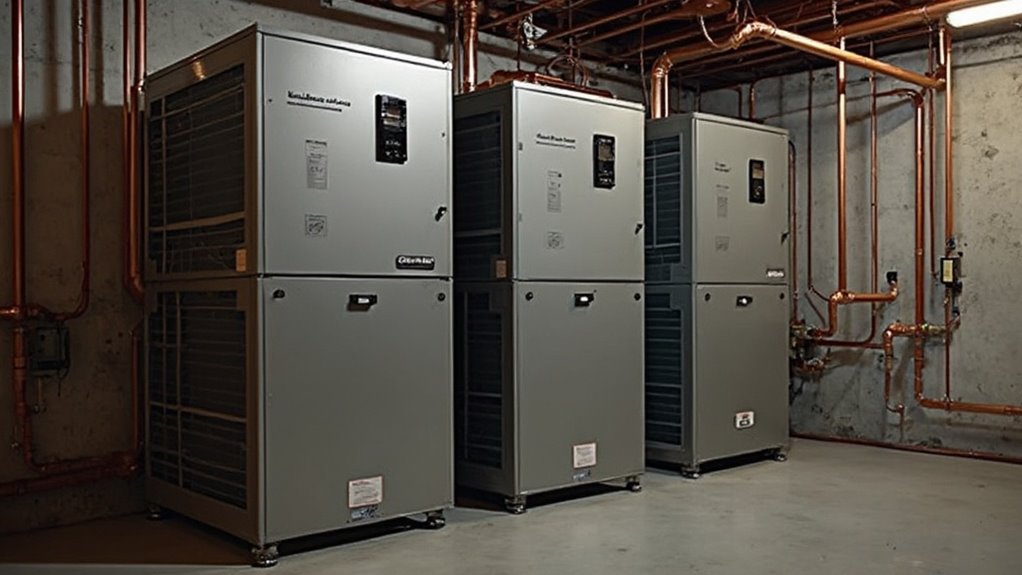
To maintain your geothermal system's peak performance, you'll need to focus on three critical areas. First, inspect your ground loop components quarterly for wear, leaks, and proper fluid circulation. Second, monitor and maintain proper antifreeze levels, ensuring a 20-25% concentration and appropriate pH balance. Third, check and replace air filters monthly, particularly in dusty conditions or homes with pets. These foundational practises will protect your investment and optimise additional opportunities for your earth-powered system.
Regular Inspection of Ground Loop Components
Regular inspection of ground loop components remains essential for ideal performance in geothermal heat pump systems, despite their known durability. One should examine the system's ground loop circuits quarterly, checking for signs of component wear at connection points and along the piping network.
It's crucial to monitor fluid levels and pressure readings, as these indicators can reveal potential leaks or circulation issues within the closed-loop system.
During inspection, particular attention should be paid to the heat exchanger coils and the condition of antifreeze solutions in cold-climate installations. One ought to document any variations in ground loop temperatures and flow rates, as these measurements help identify developing problems before they escalate.
It's essential to verify the integrity of pipe insulation and inspect buried loop sections for soil settling or surface disturbances that might affect system efficiency.
Maintaining Proper Antifreeze Levels and Quality
Since antifreeze plays a vital role in preventing system damage during freezing conditions, maintaining proper concentration levels and chemical quality cannot be overlooked in geothermal systems. Regular antifreeze testing is essential to guarantee your system's longevity and efficiency.
| Parameter | Test Frequency | Action Required |
|---|---|---|
| pH Level | Quarterly | Adjust if below 7.0 |
| Concentration | Semi-annually | Top up if below 20% |
| Clarity | Monthly | Filter if cloudy |
| Inhibitor Level | Annually | Add if depleted |
When tests indicate degradation, do not delay fluid replacement. A 20-25% antifreeze concentration should be maintained in most climates, though this varies by region. Remember to check for signs of oxidation or contamination, as these can reduce heat transfer efficiency and potentially damage your system's components.
Cleaning and Replacing Air Filters
Because air filters serve as the primary defence against airborne contaminants, their regular maintenance directly impacts your geothermal system's performance and indoor air quality.
You'll need to inspect your filters monthly, looking for accumulated dust, pollen, and debris that can restrict airflow and strain your system.
When performing air filter maintenance, you'll want to hold the filter up to a light source – if you can't see through it, it's time for cleaning or replacement.
For washable filters, use a gentle stream of water and mild soap, allowing them to dry completely before reinstallation.
If you're using disposable filters, replace them every 3-4 months, or more frequently if you have pets or live in a dusty area.
Mark filter replacement dates in your diary to guarantee consistent care of your geothermal system.
Frequently asked questions
How Long Does a Typical Geothermal Heat Pump System Last?
Your geothermal heat pump's system will last 20-25 years for indoor components and 50+ years for ground loops whilst maintaining a diligent maintenance schedule and regular system care.
Can Extreme Weather Conditions Affect the Performance of Geothermal Systems?
Whilst your geothermal system's performance efficiency isn't greatly impacted by extreme weather conditions, as it relies on stable underground temperatures, you'll notice only minimal weather impact, as the earth maintains consistent heat exchange capabilities.
What Are the Signs That My Geothermal System Needs Professional Maintenance?
Unusual noises, inconsistent temperatures and higher energy bills are common signs to watch for. These maintenance indicators, coupled with reduced heating or cooling performance, signal that your system requires a professional inspection.
Are Geothermal Systems Noisy When Operating?
Your geothermal system should operate with minimal noise levels, typically producing only gentle operating sounds similar to a whisper. You'll notice it's considerably quieter than traditional heating and ventilation systems, offering peaceful indoor comfort.
How Much Can I Expect to Save on Energy Bills With Geothermal?
Your heating and cooling costs will typically reduce by 30-60%, though your precise savings depend upon a detailed cost analysis of factors such as climate, system size, and your current utility rates.