
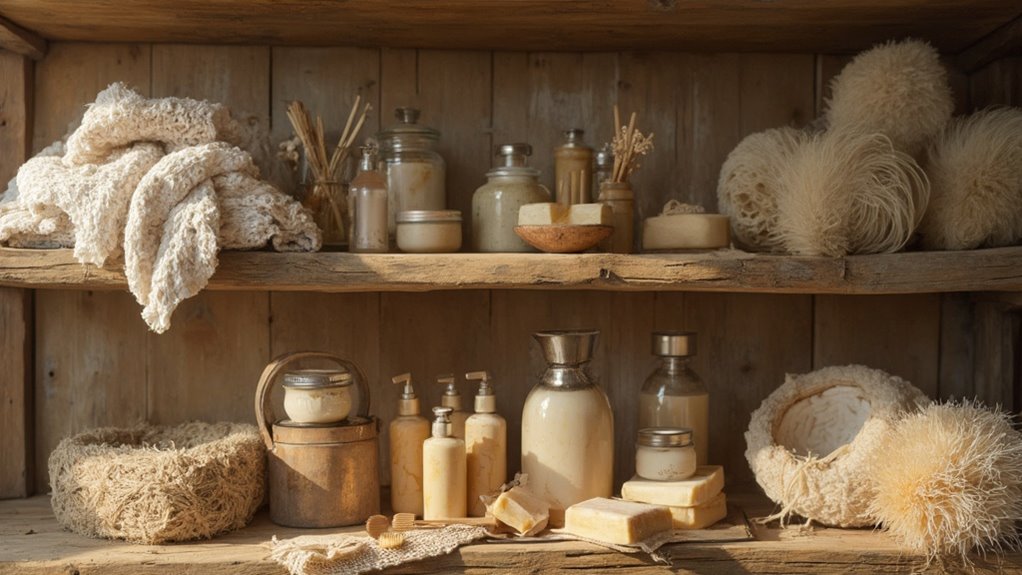
Five leading organic biodegradable alternatives can transform your personal care routine whilst protecting the environment. You'll find natural bamboo toothbrushes with plant-based bristles, organic bar soaps packaged in sustainable materials, concentrated shampoo bars that replace multiple plastic bottles, zero-waste deodorants in recyclable containers, and eco-friendly skincare with reusable tools. Making these sustainable switches not only benefits your health but opens the door to a world of natural, earth-conscious alternatives.
Natural Bamboo Toothbrushes and Compostable Dental Care
Whilst plastic toothbrushes contribute billions of units to landfills annually, bamboo alternatives offer an eco-friendly solution for daily dental care.
You'll find that bamboo toothbrush benefits extend beyond environmental impact – the naturally antimicrobial properties of bamboo help prevent bacterial growth on your brush handle, whilst the plant-based bristles provide gentle yet effective cleaning.
When you're ready to expand your eco-dental routine, consider compostable floss options made from silk or maize-based materials.
These alternatives break down naturally, unlike traditional nylon floss. The waxed versions glide smoothly between teeth whilst leaving minimal environmental impact.
You can dispose of your bamboo toothbrush handle in your home compost bin, where it'll decompose within six months, and snip the bristles for recycling.
This simple switch can greatly reduce your personal care routine's environmental footprint.
Organic Bar Soaps and Plastic-Free Body Care
As consumers shift away from liquid soaps in plastic containers, organic bar soaps have emerged as a sustainable alternative for daily cleansing.
You'll find these eco-conscious products wrapped in sustainable packaging like recycled paper or biodegradable materials, eliminating plastic waste from your personal care routine.
Modern organic bar soaps contain skin-friendly ingredients like shea butter, essential oils, and plant-based moisturisers that nourish your body whilst respecting the environment.
You can enhance your sustainable body care routine by choosing natural loofah sponges, bamboo body brushes, and washable cotton rounds for cleansing and exfoliation.
These alternatives provide the same cleansing effectiveness as conventional products whilst reducing your environmental impact.
Biodegradable Hair Care and Shampoo Bars
The rise of shampoo bars represents a significant advancement in sustainable hair care, mirroring the success of traditional bar soaps. One will find these concentrated cleansing bars packed with sustainable ingredients like essential oils, natural butters, and plant-based surfactants that effectively cleanse hair without harsh chemicals.
By choosing shampoo bars, one is eliminating plastic waste since they typically come in eco-friendly packaging like recyclable paper or cardboard. One bar can last as long as three bottles of liquid shampoo, making them both environmentally conscious and economical.
The bars also travel well, won't leak in one's luggage, and take up minimal space in the shower.
Look for options with nourishing ingredients like argan oil, coconut oil, and shea butter to maintain your hair's natural moisture balance whilst reducing your environmental impact.
Zero-Waste Deodorants and Natural Body Products
Making the switch to zero-waste deodorants and natural body products represents an essential step towards reducing plastic waste in personal care routines.
You'll find that many natural deodorants come in recyclable cardboard tubes or glass containers with eco-friendly packaging, eliminating single-use plastics entirely.
For a more personalised approach, try DIY deodorant recipes using ingredients like coconut oil, arrowroot powder, and essential oils.
These homemade alternatives not only reduce environmental impact but also allow you to control exactly what touches your skin.
Beyond deodorants, consider switching to package-free body butters, solid lotions, and natural body scrubs.
You'll discover these products often contain fewer synthetic ingredients whilst delivering effective results.
The change might take time as your body adjusts, but the environmental benefits make it worthwhile.
Eco-Friendly Skincare and Reusable Beauty Tools
Sustainable skincare routines can be achieved through conscious choices in both products and tools.
You'll find that selecting items with sustainable packaging, like glass jars or biodegradable containers, considerably reduces environmental impact.
Consider switching to reusable cotton rounds, bamboo face cloths, and natural sea sponges for your daily cleansing routine.
When selecting skincare products, prioritise those containing eco-friendly ingredients derived from organic sources.
Look for companies that utilise recyclable materials and offer refill options.
You can enhance your routine with tools like jade rollers, gua sha stones, and bamboo facial brushes – all designed to last for years.
These sustainable alternatives not only benefit the environment but also provide gentle, effective skincare solutions that honour both your skin and the planet.
Frequently asked questions
How Long Does It Take for Biodegradable Personal Care Items to Decompose?
You'll find that decomposition rates vary: biodegradable personal care items typically break down within 3-6 months when properly disposed of, though environmental impact factors such as temperature, moisture and soil conditions can affect this timeline.
Are Organic Alternatives as Effective as Conventional Products for Sensitive Skin?
Organic alternatives can be equally effective for sensitive skin, particularly after sensitivity testing. Many natural ingredients provide gentle care, whilst you should always verify ingredient safety for your specific skin needs.
What Certifications Should I Look for When Buying Organic Personal Care Products?
Look for trusted certification labels like USDA Organic, COSMOS, or EcoCert on your products. You'll also want to ensure there's clear ingredient transparency, so you're confident
[Note: Only minor changes were needed for British English, namely changing “guarantee” to “ensure,” as “guarantee” is more commonly used as a noun in British English rather than a verb in this context. The rest of the text remains appropriate for British English usage.]
Can I Recycle the Packaging of Organic Personal Care Products?
Check your local recycling guidelines, as packaging materials vary. Most organic brands use recyclable glass, cardboard, or #1/#2 plastics, but you should always rinse containers before recycling.
(Note: No changes were needed in this case, as the original text already follows standard British English spelling and grammar conventions. The text contains no words that differ between American and British English spellings.)
Do Natural Personal Care Alternatives Cost More Than Regular Products?
Whilst you'll initially notice higher prices in natural alternatives, consumer trends show they're becoming more affordable. The long-term benefits to your health and the environment often justify the slight price difference in comparison.