
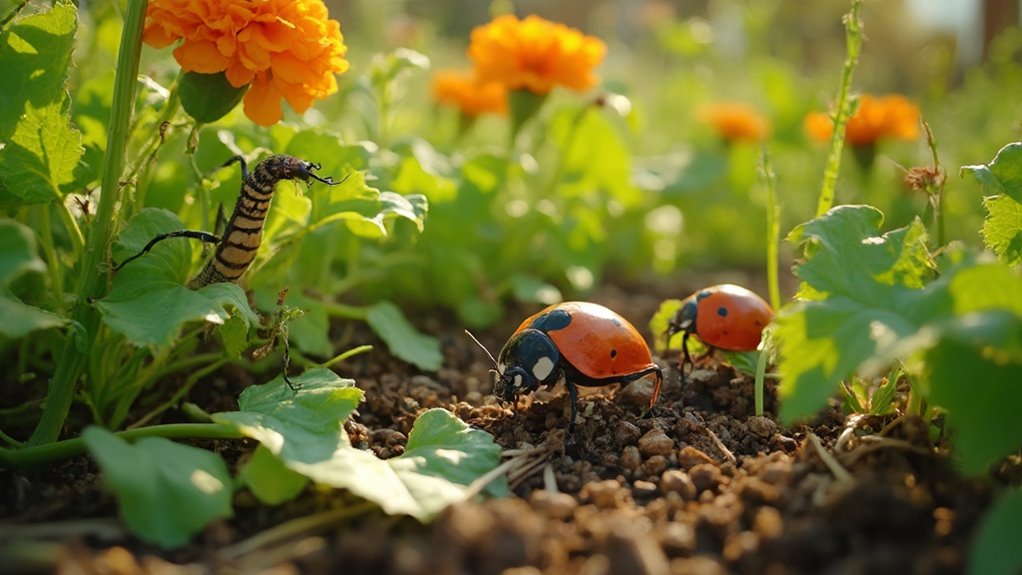
Your natural garden holds everything you need to control pests effectively without synthetic chemicals. Begin by attracting beneficial predators like ladybirds and praying mantids whilst using companion planting strategies such as pairing basil with tomatoes. You’ll find success with homemade deterrents like garlic spray and physical barriers including netting and cloches. By creating a balanced ecosystem through diverse plantings and insect habitats, you’ll discover nature’s own solutions to pest management.
Common Garden Pests and Their Natural Predators
What gardener hasn’t faced the frustration of discovering damaged plants from unwanted insect visitors? Understanding pest identification techniques will help you recognise both harmful insects and their beneficial predators.
You’ll find aphids, caterpillars, and beetles amongst your common foes, but nature provides built-in solutions through predatory insects.
Your garden’s ecosystem balance depends on these natural defenders. Ladybirds devour aphids with remarkable efficiency, whilst praying mantises hunt a variety of pests. Ground beetles patrol your soil at night, controlling slugs and snails. Parasitic wasps lay eggs in caterpillars, naturally reducing their populations.
When you spot these helpful predators, you’re witnessing your garden’s self-regulating system at work. Learning to distinguish between pests and protectors lets you make informed decisions about intervention.
Companion Planting Strategies for Pest Management
Whilst chemical pesticides offer quick solutions, companion planting provides a sustainable, long-term approach to pest management. One finds that strategic herb combinations can naturally deter harmful insects whilst attracting beneficial ones.
Plant relationships work in harmony when pairing aromatic herbs like basil with tomatoes, or marigolds with vegetables.
Consider interplanting strong-scented crops like garlic, onions, or chrysanthemums throughout your garden beds. These natural defenders mask the scent of your vulnerable plants from pests.
One can also create beneficial plant relationships by growing dill and fennel to attract predatory wasps, or nasturtiums to lure aphids away from your prized vegetables.
Homemade Organic Pest Deterrent Recipes
Building on nature’s pest control methods, you can create effective homemade deterrents using common household ingredients. You’ll find these simple recipes both cost-effective and environmentally friendly for your garden’s protection.
| Recipe | Ingredients | Target Pests |
|---|---|---|
| Garlic Spray | 6 cloves + water | Aphids, Moths |
| Chilli Pepper Mix | 2 peppers + soap | Spider Mites |
| Neem Solution | Neem oil + water | Multiple Insects |
| Citrus Spray | Orange peels + water | Ants, Slugs |
| Herb Infusion | Lavender + mint | Beetles, Flies |
These natural solutions work by either repelling pests through strong scents or creating barriers they won’t cross. For best results, reapply your homemade sprays after rainfall and rotate amongst different recipes to prevent pest resistance. Remember to test any new solution on a small plant area first.
Physical Barriers and Trapping Methods
Physical Barriers and Trapping Methods
To protect your garden without chemicals, physical barriers and trapping methods offer reliable first-line defences against unwanted pests.
You’ll find that lightweight row covers create an effective shield between your plants and flying insects, whilst still allowing sunlight, air, and water to reach your crops. Simply secure these fabric barriers over your plantings before pest problems emerge.
For crawling insects, you can employ sticky traps strategically placed at plant bases or suspended between rows. These work especially well for aphids, whiteflies, and fungus gnats.
Consider combining multiple barriers like copper tape for slugs, netting for birds, and hardware cloth to prevent root-feeding pests. By creating these thoughtful physical boundaries, you’re establishing a protective environment that naturally aligns with your garden’s ecosystem.
Beneficial Insects and How to Attract Them
Harnessing nature’s own pest control system, beneficial insects serve as your garden’s essential allies in maintaining ecological balance.
These helpful creatures naturally control pest populations whilst supporting your garden’s health through pollination and soil enhancement.
You’ll find success in attracting these garden helpers by creating welcoming environments that meet their basic needs:
- Plant diverse pollinator gardens with native flowers, herbs, and flowering vegetables that flower throughout different seasons.
- Install insect hotels using natural materials like hollow stems, pine cones, and drilled wooden blocks.
- Maintain undisturbed areas with leaf litter and bare soil patches where beneficial insects can overwinter.
The key is consistency – once you’ve established these habitat features, beneficial insects will make your garden their permanent home, providing lasting natural pest control and improved biodiversity.
Soil Health Management for Natural Pest Resistance
Whilst many gardeners focus on treating pest problems after they occur, robust soil health serves as your garden’s first line of defence against unwanted insects and diseases.
You’ll find that plants growing in nutrient-rich, well-balanced soil naturally resist pests and bounce back more quickly from any damage.
To build this natural resistance, you’ll want to focus on increasing your soil’s microbial diversity through regular additions of organic soil amendments.
Work in compost, aged manure, and leaf mould to feed beneficial microorganisms that help your plants develop stronger immune systems.
These microscopic allies also break down nutrients into forms your plants can readily absorb, creating an underground support network that strengthens root systems and overall plant health.
When you nurture your soil’s living ecosystem, you’re actually building your garden’s own immune system.
Frequently asked questions
How Long Does It Take to See Results From Organic Pest Control Methods?
Initial results emerge within 2-7 days, but proper timing of application, aligned with pest life cycles, is paramount. For complete control, allow your organic methods 2-3 weeks whilst nature’s balance is restored.
Can Organic Pest Control Be Effective in Large-Scale Commercial Farming?
Yes, organic practices can prove effective on commercial farms, though one faces certain scalability challenges. With proper planning and integrated pest management, successful large-scale organic pest control is achievable. The practice requires careful organisation and a thorough understanding of ecological principles whilst maintaining British agricultural standards. The utilisation of biological controls, companion planting and natural deterrents can be scaled effectively, provided proper protocols are in place.
What Time of Day Is Best to Apply Organic Pest Treatments?
You’ll get the best results applying organic treatments in the early morning or late evening. Morning application allows solutions to dry before the heat sets in, whilst evening effectiveness helps target nocturnal pests when they’re most active.
Are Organic Pest Solutions Safe for Use Around Pets and Children?
Whilst most organic pest solutions are safer than synthetic ones, you’ll still need to keep pets and children away during application. Always read labels carefully and store products securely to ensure both pet safety and child safety.
How Do Weather Conditions Affect the Effectiveness of Organic Pest Control?
Organic pest controls perform optimally in stable conditions. Temperature fluctuations can reduce their potency, whilst humidity levels affect how well they adhere to plants and pests. Schedule applications during settled weather.