
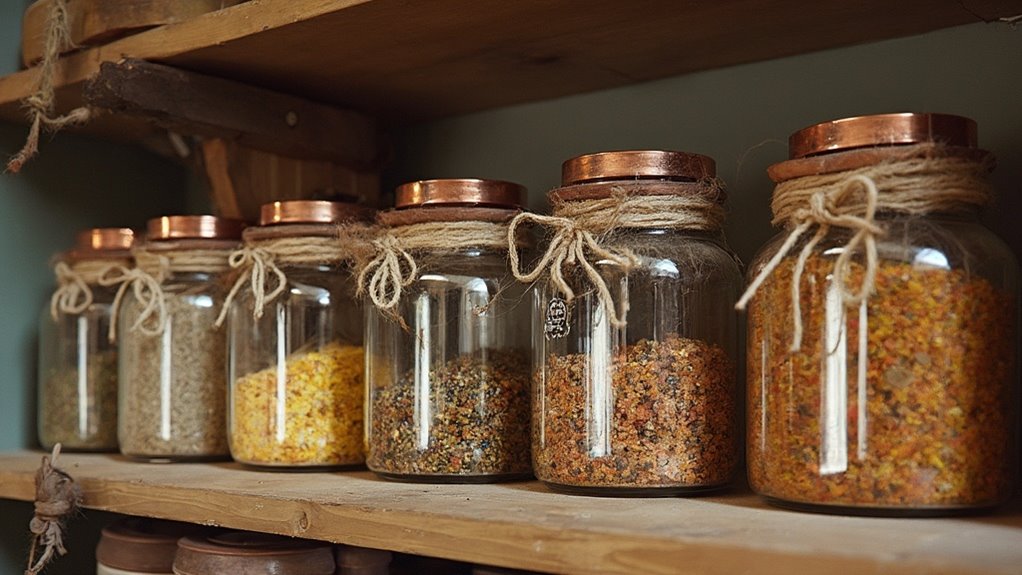
Transform your kitchen into an organised oasis by upcycling glass jars into stylish storage containers. You'll need basic supplies like adhesive remover, sandpaper, and decorative elements to get started. Begin by thoroughly cleaning and sanitising your jars, then customise them with chalk markers, vintage labels, or hand-painted designs. Use different sizes for various ingredients – from tiny spice jars to large pantry storage. The possibilities for creating your perfect storage system are as clear as the glass itself.
Why Glass Jars Are Perfect for Kitchen Organization
Glass jars stand amongst the most versatile and sustainable storage solutions for any kitchen.
You'll discover their transparency allows you to instantly identify contents, whilst their airtight seals keep ingredients fresh and protected from moisture. The smooth, non-porous surface of glass prevents absorption of flavours or odours, ensuring your stored items maintain their intended taste.
Amongst the many glass jar benefits, you'll appreciate how they're chemical-free, unlike plastic containers that may leach harmful substances.
They're also ideal for kitchen organisation, as their uniform shapes stack efficiently, maximising vertical space in cupboards and pantries. You can easily clean and sterilise them, making them perfect for storing dry goods, preserves, or leftovers.
Their durability means they'll serve you for years, reducing waste whilst maintaining a clean, cohesive aesthetic in your kitchen.
Essential Tools and Materials for Upcycling Jars
Before starting your jar upcycling journey, gathering the right tools and materials will guarantee smooth, professional results.
You'll need adhesive removers, wire wool, and white vinegar to eliminate stubborn labels and residue. A collection of fine-grit sandpaper proves essential for smoothing any rough edges around jar rims.
For advanced jar repurposing, invest in basic spray paint primers, chalk paint, and food-safe sealants. Keep decorative elements like string, ribbon, and chalkboard labels within reach.
Your upcycling techniques might require simple tools such as screwdrivers for creating drainage holes, or small brushes for detailed paint work. Consider acquiring rubber grommets and preserving jar accessories like pour spouts or shaker tops, depending on your intended use.
Remember to have cleaning supplies ready – washing-up liquid, warm water, and microfibre cloths will be your constant companions.
Preparing and Cleaning Used Glass Jars
Three fundamental steps transform used glass jars into pristine vessels ready for upcycling. Before beginning any cleaning methods, let's ensure your jar preparation follows a proven sequence that yields consistently excellent results.
- Remove labels and adhesive residue by soaking jars in warm, soapy water for 30 minutes, then gently scraping with a plastic spatula.
- Sanitise jars by submerging them in boiling water for 10 minutes, ensuring complete sterilisation of all surfaces.
- Eliminate stubborn odours by creating a paste with bicarbonate of soda and water, applying it to the jar's interior, and letting it sit overnight.
- Dry thoroughly in a clean drying rack or with a lint-free cloth, paying special attention to the threads and underside of the lid.
You'll know you're ready for the next step when your jars sparkle and smell fresh.
Creative Storage Solutions Using Glass Jars
Now that your jars shine with pristine clarity, they're ready to revolutionise your kitchen storage. Transform your space with eco-friendly storage solutions that blend functionality with jar aesthetics, creating an organised haven that speaks to your sustainable values.
| Storage Area | Perfect Jar Size |
|---|---|
| Pantry | Litre |
| Spice Shelf | 120 ml |
| Counter | 2 Litre |
| Under Sink | 500 ml |
Let these transparent vessels showcase nature's bounty whilst maintaining freshness. Store your grains, pulses, and dried herbs in larger jars, allowing their natural colours and textures to create an artful display. Position smaller jars along your spice shelf, where their uniform heights create a pleasing rhythm. You'll find that as you embrace these storage solutions, your kitchen becomes both a functional workspace and a reflection of mindful living.
Labeling and Decorating Your Upcycled Containers
Whilst your glass jars serve as practical storage vessels, thoughtful labelling and decoration transform them into personalised kitchen assets.
Consider various labelling techniques that complement your aesthetic whilst maintaining functionality. Chalk markers offer flexibility, whilst permanent options provide lasting clarity for your organisational system.
Explore these decorative ideas to elevate your storage:
- Hand-painted botanical illustrations using food-safe enamel paint
- Vintage-inspired paper labels sealed with mod podge
- Etched glass designs created with stencils and glass-etching cream
- Twine-wrapped lids accented with dried herbs or wooden tags
Your personal touch will make each jar unique whilst maintaining a cohesive look.
Remember that simplicity often yields the most elegant results, allowing the contents to remain visible whilst showcasing your artistic expression.
Maintenance Tips for Your Glass Jar Storage System
Maintaining your glass jar storage system requires consistent attention to cleanliness and organisation for ideal functionality. Regular jar maintenance ensures your containers remain pristine and safe for storing dry goods and preserves. You'll want to wash and thoroughly dry each jar before refilling, paying special attention to the threads where residue often accumulates.
Lid preservation is equally vital to your storage system's longevity. Inspect rubber seals monthly for signs of wear or deterioration, and replace them when necessary. You can extend the life of metal lids by keeping them dry and rust-free.
When washing lids, avoid soaking them in water, as this can compromise their protective coating. Instead, wash them quickly by hand and dry immediately with a clean cloth. Store empty jars with their lids loosely attached to prevent trapped moisture whilst protecting the threads.
Frequently asked questions
Can Glass Jars Withstand Freezing Temperatures for Storing Frozen Foods?
Most glass jars are durable enough for frozen food storage, but you must leave space for expansion and avoid sudden temperature changes. For optimal results, select wide-mouth preserving jars specifically designed for freezing.
How Long Do Rubber Seals on Upcycled Jar Lids Typically Last?
Rubber seals on jar lids typically last 12-18 months with proper care. To extend their longevity, clean them gently, avoid harsh washing-up liquids, and store lids in a cool, dry place between uses.
Are Certain Types of Glass Jars More Prone to Breaking?
Thinner glass jars and those with stress points around their edges tend to break more readily. Temperature shock and physical impact are key factors in breakage, whilst mason jars and thick pickle jars offer superior durability.
What's the Maximum Temperature Glass Jars Can Safely Handle?
Most glass jars can withstand temperatures up to 175°C, but beware of thermal shock – sudden temperature changes can cause breakage. Look for heat-resistant borosilicate glass if you're planning high-temperature uses.
Can Upcycled Glass Jars Be Used for Fermenting Foods Safely?
Glass jars are brilliant for fermentation safety, provided you properly sterilise them first. They create an ideal environment for beneficial bacteria, and their non-reactive surface won't interfere with your fermented treasures.