
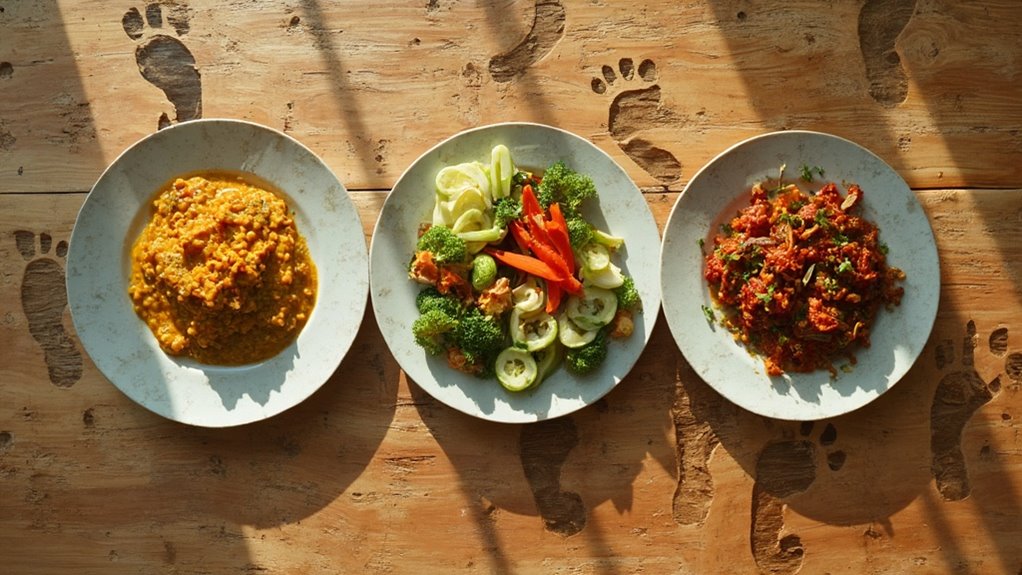
Your choice to eat plant-based foods cuts carbon emissions in three powerful ways. Firstly, you'll reduce agricultural emissions since plant crops produce far fewer greenhouse gases than livestock operations. Secondly, you're helping decrease deforestation driven by the massive land demands of animal farming. Thirdly, you'll lower transportation-related emissions since plant foods don't require constant energy-intensive refrigeration during shipping. Understanding these impacts reveals even more ways your food choices protect our planet.
Lowering Agricultural Emissions Through Plant-Based Choices
Whilst many people focus on transport and energy when thinking about carbon reduction, the impact of our dietary choices on agricultural emissions is equally significant.
When you choose plant-based foods, you're directly supporting agricultural practices that produce fewer greenhouse gases than livestock farming.
You'll find that sustainable farming methods, like crop rotation, flourish in plant-based agriculture. These practices naturally enrich soil health whilst reducing the need for synthetic fertilisers that contribute to carbon emissions.
Reducing Deforestation by Decreasing Livestock Demands
The livestock industry's demand for grazing land and feed crops stands as a leading driver of global deforestation.
When you choose plant-based meals, you're directly supporting forest conservation by reducing the need to clear land for animal husbandry. Your food choices help preserve essential ecosystems that serve as Earth's natural carbon sinks.
- Every hectare of forest saved can absorb about 6.2 tonnes of carbon dioxide annually
- Sustainable agriculture practises require considerably less land than livestock farming
- Your plant-based diet helps protect indigenous communities and wildlife that depend on forest habitats
Minimizing Transportation and Storage Carbon Costs
Plant-based foods generally require less energy-intensive transportation and storage compared to animal products, since they don't need constant refrigeration throughout the supply chain.
When you choose plant-based options, you're supporting a system that naturally reduces carbon emissions through efficient logistics and simpler storage needs.
You'll find that many plant-based staples, like grains, pulses, and root vegetables, can be stored at room temperature for extended periods.
This flexibility allows for local sourcing and bulk transportation, cutting down on frequent delivery journeys.
Think about dried beans versus fresh meat – whilst meat requires immediate refrigeration and quick delivery, beans can wait patiently in your larder.
Frequently asked questions
How Do Plant-Based Diets Affect Soil Health and Carbon Sequestration?
When one opts for plant-based eating, one is supporting farming practices that enrich soil microbiomes and boost carbon storage. One's food choices help create living soils that pull carbon from the air into the ground.
What Is the Carbon Footprint Difference Between Organic and Conventional Plant Farming?
Organic farming yields 40% fewer carbon emissions than conventional methods. When choosing organic, one avoids the heavy carbon footprint of synthetic fertilisers and intensive tilling used in conventional farming.
Can Vertical Farming for Plant-Based Foods Help Reduce Carbon Emissions?
Vertical farming's efficiency reduces carbon emissions through less transportation, water usage and land requirements. Urban agriculture's benefits include growing food closer to home whilst cutting energy usage throughout the year.
How Do Seasonal Eating Patterns Impact the Carbon Footprint of Plant-Based Diets?
Whilst opting for locally sourced and seasonal produce, you'll slash your food's carbon footprint considerably. You're working in harmony with nature's rhythm, cutting transport emissions, and supporting nearby farmers who cultivate what's naturally flourishing in your area.
What Role Do Food Packaging Materials Play in Plant-Based Diet Emissions?
Packaging waste considerably impacts your plant-based diet's eco-footprint. By choosing bulk bins, participating in recycling initiatives, and avoiding excess plastic wrapping, you're reducing your environmental impact beyond mere food choices.