
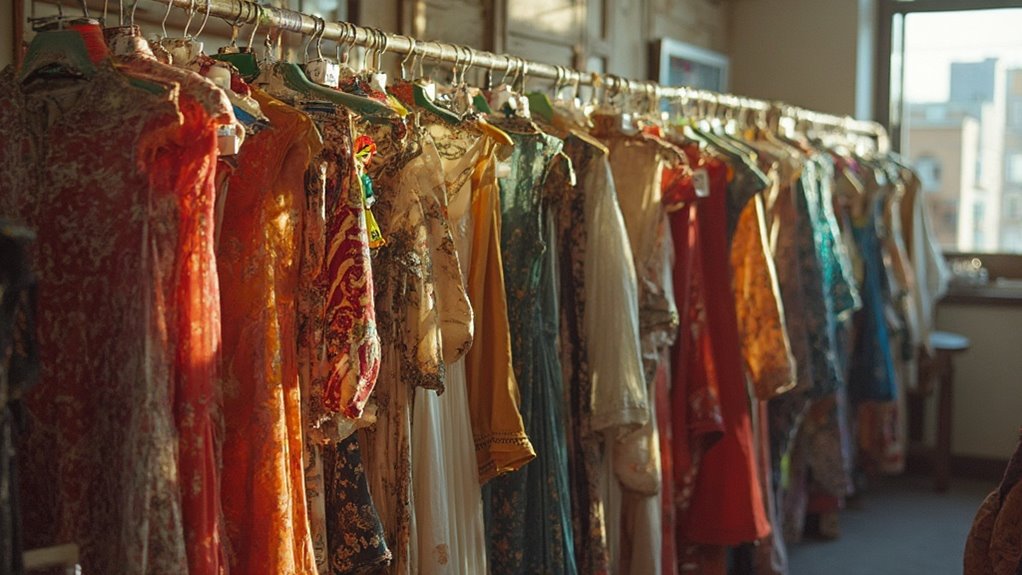
Successful sustainable secondhand shopping starts with knowing your precise measurements and keeping them to hand. You'll want to research quality brands, thoroughly inspect items for damage, and focus on timeless pieces over trends. Develop basic mending skills and build relationships with local charity shops for insider knowledge. Proper care and storage of your finds will extend their life, whilst shopping during off-peak hours helps you discover the best pieces. These foundational practices will transform your secondhand shopping experience.
Know Your Measurements Before You Shop
Three essential measurements can make or break your secondhand shopping success: your bust, waist, and hips. Since vintage and secondhand clothing sizes vary dramatically across decades and brands, you'll need these body measurements as your guide.
Keep them handy in your mobile's notes or on a small card in your purse.
When shopping online, you'll find that accurate measurements help you navigate size charts with confidence. Remember that a 1960s size 12 fits more like today's size 10, and European sizing can be equally tricky.
Don't rely on the labelled size – always compare your measurements to the item's actual dimensions. This simple preparation saves you from disappointing purchases and unnecessary returns, making your sustainable shopping journey more efficient and enjoyable.
Research Quality Brands and Materials
Whilst browsing secondhand shops can feel overwhelming, knowing which brands consistently deliver quality will streamline your search.
Take time to research brands known for their durability and craftsmanship before you shop. You'll want to focus on those with proven track records for brand sustainability and lasting construction.
Get familiar with fabric composition and material durability. Natural fibres like wool, cotton, and silk often age better than synthetic materials.
Check seams, buttons, and zips carefully – quality pieces typically feature reinforced stitching and sturdy hardware. You'll also benefit from learning which brands tend to maintain their shape and colour after multiple washes.
Create a quick reference list of trusted brands on your mobile, making it easier to spot worthwhile pieces when you're scanning crowded rails.
Inspect Items Thoroughly for Damage
Before making any secondhand purchase, you'll need to carefully examine items for signs of wear, damage, or defects that could affect their longevity. Your damage assessment should cover every centimetre of the item, paying special attention to high-stress areas like seams, buttons, and zips.
| Area to Check | What to Look For | Quality Verification |
|---|---|---|
| Fabric | Holes, stains, bobbling | Hold up to light |
| Seams | Loose threads, gaps | Gently pull test |
| Hardware | Rust, functionality | Test each component |
Remember to test all moving parts during your inspection. For clothing, check under collars and cuffs where wear often occurs first. For furniture, examine joints and weight-bearing areas. If you spot minor fixable issues, factor repair costs into your decision. Trust your instincts – if something doesn't feel quite right, it's perfectly acceptable to pass.
Choose Timeless Pieces Over Trendy Items
Although trends come and go quickly in the fashion world, investing in timeless secondhand pieces will give you more versatility and longevity in your wardrobe.
Focus on classic styles that have proven their staying power – think tailored blazers, well-cut jeans, and neutral-coloured coats that you'll wear for years to come.
When browsing secondhand shops, look for wardrobe staples in quality materials like wool, silk, and durable cotton.
These pieces not only last longer but also maintain their shape and appearance through multiple wears.
Consider items with clean lines and traditional silhouettes that won't look dated next season.
A black dress, crisp white shirt, or structured leather handbag will serve you well, whilst that neon geometric print jacket might end up back in the donation pile within months.
Learn Basic Clothing Repair Skills
Learning basic sewing and repair skills transforms your approach to charity shop shopping by expanding your options beyond just "perfect condition" items. Once you understand fundamental sewing techniques and fabric types, you'll spot diamonds in the rough that others pass by.
| Skill Level | Essential Repairs |
|---|---|
| Beginner | Button replacement, hem fixing |
| Intermediate | Seam repair, patch application |
| Advanced | Zip replacement, fabric darning |
You'll save money by purchasing items that need minor fixes, whilst developing a deeper appreciation for garment construction. Start with simple repairs like reattaching buttons or fixing loose seams, then gradually tackle more complex projects. Keep a basic sewing kit in your home, and you'll extend the life of your charity shop finds whilst reducing textile waste. These skills empower you to customise and maintain your wardrobe sustainably.
Shop During Off-Peak Hours and Seasons
Timing your visits to charity shops strategically can dramatically improve your shopping success. Visit charity shops during weekday mornings or early afternoons when fewer shoppers compete for the best finds.
Many shops restock their inventory overnight, so you'll have first access to fresh merchandise when you arrive early.
Take advantage of seasonal discounts when shops clear out their merchandise. You'll find winter coats marked down in spring and summer clothes on sale during autumn.
Most charity shop hours extend into early evening on weekdays, but you'll encounter crowds during lunch breaks and after work. If possible, schedule your shopping trips during off-peak times like Tuesday or Wednesday mornings.
You'll enjoy a more relaxed browsing experience and better chances of discovering hidden gems at brilliant prices.
Build Relationships With Local Thrift Stores
Building friendly connections with your local charity shop staff provides invaluable insider knowledge about new arrivals and special offers. Establishing partnerships through regular visits and genuine community engagement creates a mutually beneficial relationship that enhances your shopping experience.
Ways to cultivate meaningful connections with your local secondhand shops:
- Introduce yourself to staff members and learn their names – personal connections matter.
- Share feedback about your positive shopping experiences and items you're seeking.
- Participate in shop events and donation drives to demonstrate your commitment.
- Sign up for their loyalty programmes or mailing lists to stay informed about exclusive deals.
These relationships often lead to staff setting aside items that match your interests and alerting you to upcoming sales before they're publicly announced to the general public.
Create a Sustainable Shopping Strategy
When approaching secondhand shopping with intention, you'll need a well-crafted strategy to maximise both sustainability and success. Start by embracing sustainable budgeting practices that align with your values whilst considering seasonal trends that influence availability.
| Strategy Component | Action Steps |
|---|---|
| Budget Planning | Set monthly charity shop allowance |
| Timing | Shop off-season for best deals |
| Item Priority | List essential vs optional items |
| Quality Control | Inspect items thoroughly |
Your strategy should include regular wardrobe audits to identify genuine needs versus wants. By tracking your purchases and maintaining a thoughtful approach to secondhand shopping, you'll develop a more conscious consumption pattern. Remember to balance your sustainable shopping goals with practical considerations like storage space and lifestyle requirements. This mindful approach guarantees you're making meaningful additions to your wardrobe whilst supporting environmental sustainability.
Care and Maintenance for Secondhand Finds
Care and Maintenance for Secondhand Finds
Proper care and maintenance of secondhand items isn't just about preserving your purchases – it's essential for extending their lifespan and maximising their environmental benefits.
When you bring home preloved treasures, you'll want to give them the attention they deserve to guarantee they remain part of your life for years to come.
- Always check fabric care labels and follow their instructions meticulously, even if the previous owner didn't.
- Address stain removal immediately using gentle, environmentally-friendly solutions before they set permanently.
- Make minor repairs promptly to prevent small issues from becoming irreparable damage.
- Store items properly between uses – hang structured pieces, fold knitwear, and use breathable garment bags.
These mindful practises won't just protect your secondhand finds; they'll help you build a lasting, sustainable wardrobe that reflects your values.
Frequently asked questions
How Do I Avoid Bed Bugs When Buying Secondhand Furniture?
Whilst purchasing secondhand furniture, you'll need a thorough inspection before buying. Check seams, crevices and joints for bed bugs. Bring a torch, inspect outdoors and consider a bed bug prevention spray before bringing items into your home.
Can I Negotiate Prices at Secondhand Stores?
Yes, you can negotiate prices, but it's important to practise good charity shop etiquette. Independent shops are usually more open to price negotiation than chain stores. Be polite and reasonable with your offers.
Which Secondhand Items Should I Absolutely Never Buy?
Used electronics without warranty protection ought to be avoided, as should vintage shoes showing visible wear. Intimate items such as undergarments, helmets or child car seats should never be purchased second-hand—one's safety and hygiene must always take precedence.
Are There Specific Days When Thrift Stores Restock Their Inventory?
Most charity shops restock daily, though their specific restocking schedules vary. Ring your local shops to learn their inventory management patterns. Many refresh shelves on weekday mornings or after weekend donations.
How Do I Remove Musty Smells From Secondhand Clothing?
Add one cupful of vinegar and a measure of bicarbonate of soda whilst washing your garments, then hang them to dry in direct sunlight. For more delicate fabrics, place the items in a bag overnight with tumble dryer sheets.