
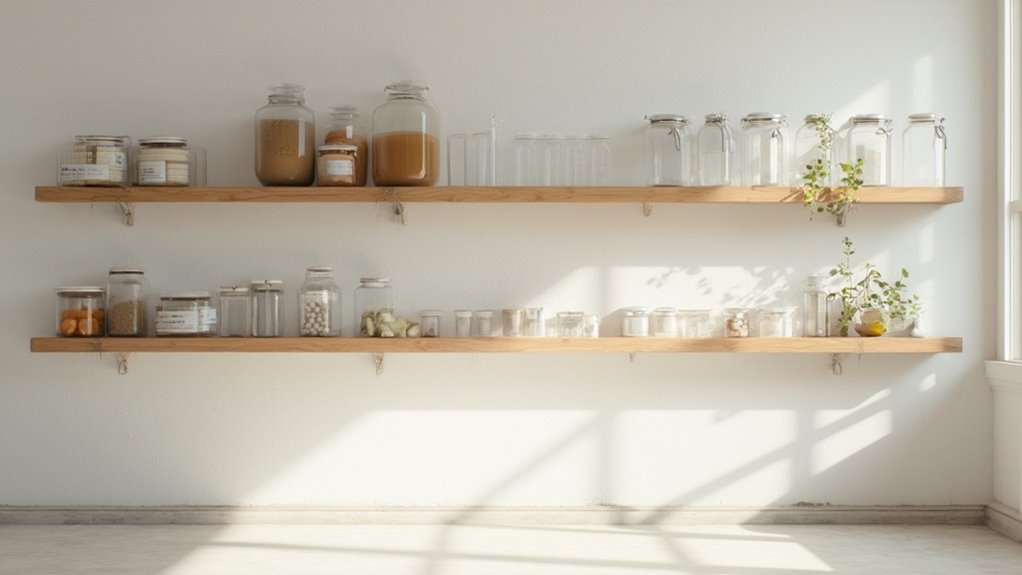
Transform your living space with strategic storage solutions that embrace zero-waste principles. You’ll maximise vertical space using wall-mounted racks and adjustable shelving, whilst repurposing everyday containers like pasta jars and tin cans for clever organisation. Implement multi-purpose baskets and clear stackable bins to reduce clutter, and utilise hidden storage opportunities beneath furniture and in alcoves. By thinking vertically and creatively, you’ll discover countless ways to optimise your minimalist sanctuary.
Essential Multi-Purpose Storage Solutions
When space comes at a premium, multi-purpose storage solutions become your most valuable allies in maintaining a clutter-free home.
Start by investing in versatile multi-purpose baskets that can serve as both decorative elements and functional storage. These natural fibre containers work beautifully for organising produce in your kitchen, storing bathroom essentials, or housing sitting room items you’d rather keep out of sight.
For your wardrobes and cupboards, opt for clear stackable bins that let you instantly spot what’s inside whilst maximising vertical space.
You’ll find these particularly useful for organising seasonal items, craft supplies, or bulk larder goods. By choosing containers that serve multiple functions, you’re not just saving space – you’re reducing the need for excess storage items, aligning perfectly with a minimalist lifestyle.
Vertical Space Maximization Techniques
Vertical Space Maximisation Techniques
Space organisers know that vertical storage holds the key to maximising every centimetre in compact homes. When you’re living in a small space, looking up reveals untapped potential.
By implementing clever shelf stacking techniques and installing wall-mounted racks, you’ll transform unused vertical areas into functional storage zones that keep your minimalist lifestyle intact.
- Install adjustable wall-mounted racks behind doors for storing cleaning supplies and everyday items you need quick access to.
- Create a vertical garden using hanging planters and tiered shelf systems, bringing nature indoors whilst saving precious floor space.
- Utilise tension rods and over-door organisers to maximise narrow spaces between walls and in tight corners.
Remember to think vertically in every room – your walls are blank canvases waiting to help you live more sustainably with less clutter and more purpose.
Hidden Storage Opportunities in Plain Sight
Hidden gems of storage potential surround you in the most unexpected places. You’ll find valuable space beneath your bed where sliding containers can house seasonal clothing and linen.
Transform dead space into living storage by installing wall-mounted shelves in narrow hallways and hidden alcoves. Your staircase holds untapped potential – each step can become a pull-out drawer for trainers, books, or cleaning supplies.
Look up and you’ll discover ceiling hooks perfect for hanging plants, baskets, or kitchen utensils. Behind-door organisers maximise every inch of vertical space, whilst decorative baskets double as stylish storage solutions.
Don’t overlook your furniture’s potential – ottoman compartments, hollow coffee tables, and bench seating can conceal items whilst maintaining your minimalist aesthetic.
These clever storage solutions help you live with less visible clutter whilst keeping essentials close at hand.
Zero-Waste Container Transformation Ideas
Before disposing of everyday containers in the recycling bin, consider their potential as clever storage solutions.
You’ll find endless possibilities for jar repurposing and tin can upcycling right in your kitchen. Those pasta sauce jars can become perfect vessels for storing dry goods, whilst clean tin cans transform into stylish desk organisers or herb planters.
- Paint and decorate tin cans with natural twine and beeswax to create rustic bathroom storage for toothbrushes and cotton buds.
- Transform wide-mouth preserving jars into organised sewing kits, with the lid’s flat surface serving as a built-in pin cushion.
- Convert olive oil bottles into sleek dispensers for homemade cleaning solutions, adding a spray top from an empty shop-bought cleaner.
Smart Kitchen Organization Systems
Whilst repurposed containers offer excellent storage solutions, organising your entire kitchen demands a more thorough approach.
You’ll want to start with kitchen drawer organisation, using adjustable dividers to create custom spaces for your utensils and tools. Consider vertical storage solutions that maximise your cabinet height, letting you stack items without creating clutter.
For pantry shelf optimisation, install pull-out drawers that give you easy access to items stored in deep spaces. Group similar items together and position frequently used ingredients at eye level.
You’ll find that clear containers with airtight seals work wonders for bulk storage of grains, pulses, and dried goods. By implementing zones based on your cooking habits, you’ll create an intuitive flow that reduces waste and makes meal preparation more efficient.
Sustainable Closet Storage Strategies
Making your closet more sustainable starts with a thorough assessment of your current storage needs and available space. Think beyond traditional hangers and embrace sustainable fabric choices for your storage solutions, like organic cotton garment bags and bamboo drawer dividers. Your capsule wardrobe planning becomes easier when you organise clothes by season and purpose.
- Use vertical space wisely with hanging organisers made from recycled materials
- Install adjustable bamboo shelving that grows with your needs
- Sort clothes using fabric bins crafted from natural, biodegradable materials
Transform your closet into an eco-conscious sanctuary by choosing storage solutions that align with your minimalist values. Roll your clothes instead of folding them to maximise space and reduce wrinkles.
Consider using cedar blocks instead of synthetic fresheners to naturally protect your garments whilst maintaining a clean, fresh-smelling space.
Eco-Friendly Decluttering Methods
To declutter sustainably, you’ll need to approach the process with both mindfulness and environmental responsibility.
Start by gathering eco-friendly tools like reusable boxes, biodegradable sacks, and cloth sorting bins instead of plastic containers. When facing decluttering challenges, resist the urge to bin everything.
Sort your items into four conscious streams: donate, recycle, compost, and repurpose. Your gently used clothes can find new homes through local charity shops, whilst broken electronics should go to certified e-waste centres.
Transform old t-shirts into cleaning cloths, and convert empty glass jars into storage containers. Remember, responsible decluttering isn’t about creating rubbish – it’s about redirecting resources.
Consider hosting a swap party with friends or listing items on neighbourhood sharing platforms before discarding anything that still holds value.
Frequently asked questions
How Do You Prevent Mould Growth in Repurposed Storage Containers?
Clean and thoroughly dry all vessels before use, ensuring you opt for mould-resistant materials such as glass or steel containers. Seal them properly with airtight lids to prevent any unwanted moisture from seeping in whilst items are being stored.
What’s the Ideal Humidity Level for Storing Zero-Waste Essentials Long-Term?
45-55% humidity control is ideal for long-term storage of zero-waste essentials. Keep a small hygrometer nearby to monitor levels – this optimal range prevents both moisture damage and brittleness in your cherished essentials.
Which Storage Materials Are Safest for Keeping Homemade Cleaning Products?
You’ll want to store your homemade cleaners in amber or clear glass containers to prevent chemical reactions. Whilst biodegradable options like bamboo are earth-friendly, they won’t protect your solutions from breaking down too quickly.
How Often Should Minimalist Storage Systems Be Rotated or Reorganised?
Minimalist storage systems ought to be evaluated each season (every 3-4 months). Take time to reorganise, assess what you’re utilising, and adjust your organising methods based on your current needs and lifestyle patterns.
Can Compact Storage Solutions Affect the Quality of Preserved Zero-Waste Foods?
Proper food preservation depends heavily upon one’s storage arrangement. If items are packed too tightly together, one reduces air circulation and storage longevity. Allow preserved goods sufficient breathing space to maintain their quality.