
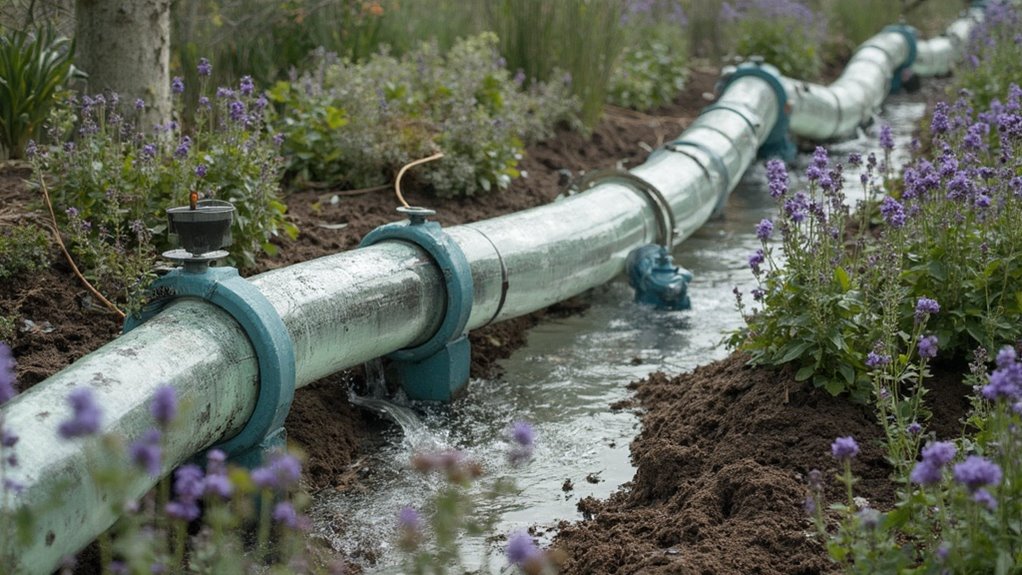
Keep your greywater system running smoothly with these essential maintenance tips: Clean filters monthly, replace them every 3-6 months, and monitor water quality through regular pH testing. You'll need to flush pipes monthly with biodegradable cleaners, adjust flow rates seasonally, and perform thorough sanitisation quarterly. Don't forget to inspect for winter damage, clear fallen leaves, and maintain detailed maintenance logs. Understanding your system's specific needs will help you maximise its efficiency and longevity.
Regular Filter Cleaning and Replacement
Three key components of a well-functioning greywater system are its filters, which require consistent attention to prevent clogging and maintain optimal flow.
You'll need to monitor your primary mesh filter, secondary carbon filter, and final polishing filter – each playing a crucial role in water purification.
Check your filter types monthly to verify they're capturing debris effectively whilst allowing proper water passage.
You'll notice sediment build-up varies with your household's water usage patterns.
Replace mesh filters every 3-6 months, depending on load, whilst carbon filters typically need replacement every 6-12 months.
Watch for signs like slower drainage or accumulating particles, as these indicate it's time for cleaning or replacement.
When cleaning reusable filters, use gentle pressure washing to preserve the filter's integrity whilst removing trapped materials.
Monitoring Water Quality Parameters
Regular monitoring of key water quality indicators is essential for successful greywater recycling to confirm safe reuse. One must perform regular water testing to track essential parameters that confirm system effectiveness and safety.
| Parameter | Ideal Range | Testing Frequency |
|---|---|---|
| pH Level | 6.5-8.5 | Weekly |
| Turbidity | <5 NTU | Bi-weekly |
| BOD | <30 mg/L | Monthly |
Parameter tracking helps identify potential issues before they become problems. Maintaining a detailed log of measurements and watching for trends might indicate system problems. One should pay special attention to sudden changes in pH levels or turbidity, as these often signal the need for maintenance. It is advisable to invest in reliable testing equipment or utilise professional laboratory services for more accurate results.
Preventing Pipe Blockages and Buildup
Maintaining clear pipes is fundamental to a greywater system's longevity and efficiency. Understanding pipe materials and common blockage causes will help you prevent costly repairs and system failures.
Your greywater pipes can accumulate soap residue, hair, lint and organic matter over time.
To maintain ideal flow and prevent buildup in your system:
- Install mesh filters at collection points to catch debris before it enters your pipes.
- Use plant-based, low-sodium cleaning products that won't react with your pipe materials.
- Flush pipes monthly with hot water and biodegradable enzyme cleaners to dissolve organic build-up.
- Inspect pipe joints quarterly for mineral deposits, particularly in hard water areas.
Managing Plant-Safe Detergent Usage
Because greywater ultimately nourishes your garden's ecosystem, choosing the right detergents and cleaning products is essential for plant health.
Look for gentle, biodegradable alternatives that contain minimal salts, boron, and chlorine. These earth-friendly products break down naturally without harming your soil's delicate microbiome.
Monitor your detergent dilution carefully – even plant-safe products can harm your garden if they're too concentrated.
You'll want to calculate the ratio of cleaning products to water flow in your system. For most home greywater setups, aim for a dilution of 1:100 or weaker.
Consider installing an automatic dilution system to maintain consistent levels.
When selecting soaps, avoid antibacterial formulae, bleaches, and softeners that can accumulate in soil and damage root systems over time.
Seasonal System Inspection Schedule
Regular inspections throughout the year help guarantee your greywater system operates at peak efficiency whilst preventing costly failures.
Creating a detailed inspection checklist that accounts for seasonal weather considerations will help you maintain your system's health through temperature fluctuations and varying precipitation levels.
- Spring: Check for winter damage, clear any debris from filters and pipes, inspect mulch basins, and test diverter valve operation.
- Summer: Monitor plant health, examine irrigation distribution, clean filters, and assess soil moisture levels.
- Autumn: Clear fallen leaves from system components, prepare mulch basins for winter, and check pipe insulation.
- Winter: Monitor freeze protection measures, verify proper drainage, and inspect indoor components monthly.
You will find this systematic approach keeps your greywater system running smoothly whilst protecting your investment throughout the year.
Proper Storage Tank Maintenance
Along with seasonal inspections, proper storage tank care forms the backbone of greywater system longevity.
You'll need to monitor your tank materials for signs of degradation, especially at connection points where different materials meet. Clean your tank's interior walls quarterly to prevent biofilm build-up that can compromise water quality and reduce storage capacity.
Don't let sediment accumulate at the tank bottom – it's essential to flush it every three months.
You should also check your tank's structural integrity by looking for hairline cracks, especially after ground movement or extreme weather events.
Keep the tank's access points sealed but easily accessible, and ensure overflow mechanisms remain clear of debris.
If you notice unusual odours or discolouration, it's time to investigate potential microbial growth or chemical imbalances.
Backflow Prevention Check-ups
Since backflow prevention safeguards your home's drinking water, you'll need to conduct monthly inspections of all check valves and anti-siphon devices in your greywater system.
These backflow prevention measures protect your family from contamination whilst supporting sustainable water practices.
Follow these routine inspection protocols to maintain system integrity:
- Test each valve's functionality by activating the relief port and confirming proper drainage.
- Listen for unusual sounds that might indicate valve failure or air gaps.
- Check for mineral build-up around valve seats and clean them with white vinegar.
- Verify that pressure readings match your system's specifications.
If you notice any irregularities during these checks, don't wait – contact a certified inspector straightaway.
Your diligence in maintaining these safety devices ensures your greywater system remains both eco-friendly and health-conscious.
Pump and Valve Performance Testing
Efficient pump operation and valve responsiveness form the cornerstone of a well-functioning greywater system.
You'll need to monitor your pump's performance by measuring flow rates and pressure levels monthly. Listen for unusual noises that might indicate bearing wear or cavitation issues.
To maintain peak pump efficiency, you'll want to check the impeller for debris build-up and clean it when necessary.
Test each valve's opening and closing action, ensuring smooth operation without sticking or excessive resistance. Schedule valve calibration checks every six months, adjusting the settings to match your system's specific requirements.
Don't forget to verify the automatic controls that manage pump cycling and valve sequencing.
Record your findings in a maintenance log – this data will help you spot performance trends and anticipate potential issues before they become problems.
Adjusting Distribution Flow Rates
Through precise flow rate calibration, you'll maximise your greywater system's distribution efficiency whilst preventing oversaturation or underwatering of designated zones.
Your garden's health relies on maintaining proper distribution balance across all irrigation points.
- Monitor each outlet's flow using a flow metre, adjusting valves until reaching the ideal rate of 2-4 gallons per minute for standard residential systems.
- Check soil moisture levels weekly to verify even distribution balance across all zones.
- Make seasonal flow rate adjustments based on plant water needs and soil absorption rates.
- Document your flow measurements and valve positions in a maintenance log for future reference.
When fine-tuning your system's flow rates, remember that subtle adjustments can appreciably impact your garden's health.
Listen to your plants – they'll tell you if the distribution needs tweaking through their growth patterns and vigour.
Sanitizing System Components
Regular sanitisation of your greywater system's components safeguards both environmental and human health by preventing harmful bacterial growth and biofilm accumulation.
You'll need to apply proven system disinfection methods quarterly to maintain peak performance.
Begin your component cleaning procedures by disconnecting power and draining the system. Mix a biodegradable sanitising solution of hydrogen peroxide or vinegar with water, avoiding harsh chemicals that could harm your garden.
Clean filters, pumps, and distribution pipes thoroughly, paying special attention to corners and joints where buildup occurs. Let the solution circulate through your system for 30 minutes, then flush with clean water until it runs clear.
Don't forget to inspect and clean collection tanks, ensuring they're free from sediment and organic matter that could compromise water quality.
Frequently asked questions
Can Greywater Systems Be Installed in Apartments or Rental Properties?
Check your local greywater regulations and obtain landlord approval first. Whilst possible, apartment plumbing modifications are often limited. Consider portable systems that connect to your washing machine or shower instead.
How Much Does a Typical Greywater System Installation Cost?
You'll find greywater system costs typically range from £400 to £12,000. Installation factors like plumbing complexity, system size, and local permits affect your cost breakdown. Simple DIY systems start lower, whilst professional installations cost more.
What Permits Are Required to Install a Greywater System?
You'll need to check your local greywater regulations, as permit requirements vary by jurisdiction. Most areas require plumbing permits and health department approvals. Follow installation guidelines to ensure your system meets building regulations and local authority requirements.
Can Greywater Be Stored Long-Term for Future Use?
Greywater shouldn't be stored for more than 24 hours, as it will quickly develop bacteria and odours. Whilst storage methods and treatment processes exist, it is best to use your greywater immediately for direct landscape irrigation.
Is It Possible to Connect Washing Machines Directly to Garden Irrigation?
Yes, you can connect your washing machine directly to garden irrigation systems using specialised diverter valves and filters. You'll need proper plumbing set-up and sloped pipes to ensure water flows efficiently to your plants.