
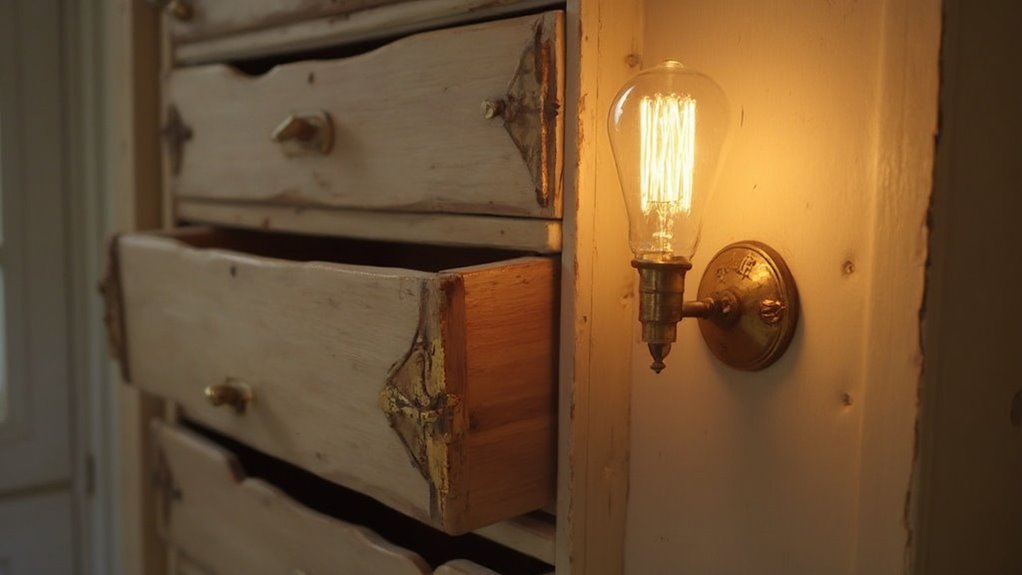
Vintage furniture pieces can be transformed into striking lighting fixtures by carefully selecting structurally sound items like chairs, side tables, or sewing machine bases. You'll need essential tools including a drill, wire strippers, and safety equipment, along with CE-marked electrical components that meet British standards. Whilst maintaining the furniture's character, you can create unique lamps by installing proper wiring, adding decorative elements, and following safety protocols. This creative endeavour opens up endless possibilities for crafting one-of-a-kind statement pieces.
Essential Tools and Materials for Furniture Lighting Projects
Three essential categories of supplies form the foundation of any furniture-to-lighting conversion project: lighting components, tools for modification, and safety equipment.
Your tool selection should include a drill with various bits, wire strippers, pliers, screwdrivers, and a utility knife.
You'll need lighting components like sockets, electrical flexes, switches, and BS-approved wiring. Don't forget bulbs that match your fixture's intended ambiance and wattage requirements.
For material sourcing, focus on acquiring proper gauge electrical wire, mounting hardware, and connectors that meet British building regulations.
Safety equipment isn't optional – you'll need insulated gloves, safety goggles, and a voltage tester.
Consider adding a fire-resistant work mat and keeping a small fire extinguisher nearby.
When working with older furniture, you'll also want a dust mask for protection against wood particles.
Safety Guidelines When Working With Electrical Components
Five critical safety protocols must be followed when handling electrical components in furniture conversion projects.
First, always disconnect power sources before beginning any work, and double-check with a voltage tester.
Second, verify your workspace remains dry and you're wearing rubber-soled shoes for proper insulation.
Third, use CE-marked components and appropriate gauge wiring for your project's electrical requirements.
Proper component handling means never forcing connections or leaving exposed wires.
You'll want to secure all connections with wire nuts and electrical tape, then house them in junction boxes.
Finally, test your creation in stages rather than waiting until the end.
If you're unsure about any electrical aspect, don't hesitate to consult a qualified electrician – your safety's worth more than any DIY project.
Creative Ideas for Chair and Table Lamp Conversions
Whilst chairs and tables may appear as everyday household items, they offer unlimited potential for stunning lamp transformations.
You'll discover that vintage wooden chairs can become elegant floor lamps when you mount fixtures through their seats, allowing light to cascade through decorative spindles. The chair's back becomes a natural shade support, creating dramatic shadows upon nearby walls.
For table lamp designs, consider converting an antique side table by installing a lamp kit through its surface, preserving original drawer space for concealed storage.
You might hollow out table legs to hide wiring or create a striking geometric lamp using a table's glass top as a translucent shade.
The key to successful chair lamp conversions lies in maintaining the furniture's character whilst seamlessly integrating modern lighting elements.
Selecting the Right Vintage Furniture Pieces
When searching for vintage furniture to transform into lighting fixtures, you'll need to assess both structural integrity and aesthetic potential. Look for pieces that aren't severely damaged but can be readily modified. Victorian end tables, mid-century modern chairs, and Art Deco vanities often make excellent candidates owing to their distinctive vintage styles and sturdy construction.
Focus on furniture types that offer natural mounting points for electrical components. Consider pieces with solid wooden surfaces for drilling, existing hollow spaces for wiring, or decorative elements that could house light bulbs naturally.
A chest of drawers with missing drawers, for instance, creates perfect alcoves for lighting placement. Don't overlook smaller items like vintage sewing machine bases or antique plant stands – their intricate metalwork can create fascinating shadow patterns when illuminated.
Step-by-Step Wiring and Assembly Techniques
Before undertaking any electrical modifications, you'll need to gather essential wiring components and safety equipment for your furniture transformation. Start with a CE-marked cord kit, wire strippers, insulation tape, and protective gloves.
Don't forget a voltage tester to guarantee safety throughout the process.
When applying wiring techniques, carefully drill an access hole in your chosen furniture piece for the cord. Strip the wire ends precisely, leaving about 12 millimetres of exposed copper.
Connect the brown wire to brass terminals, blue to silver, and green/yellow to earth. Secure all connections with connector blocks and wrap them individually with insulation tape.
For peak assembly tips, test your connections before final mounting. Create a sturdy base that conceals all wiring whilst maintaining proper ventilation.
Double-check all fixings and verify your fixture remains perfectly balanced.
Adding Finishing Touches and Decorative Elements
The final aesthetic touches transform your wired fixture from functional to stunning.
Consider layering paint techniques like distressing, crackling, or colour washing to enhance the piece's vintage character whilst complementing your room's palette. You'll find that strategic ageing methods can bring authenticity to newer components you've added during the conversion process.
Explore embellishment ideas that honour your fixture's original furniture heritage: attach vintage hardware, wrap exposed cords in plaited twine, or add decorative trim to lampshades.
Don't overlook the power of mixed materials – crystal drops cascading from a rustic wooden base or industrial metal accents on a refined Victorian piece create compelling contrasts.
Remember to seal any painted surfaces with a protective clear coat, ensuring your artistic touches endure whilst maintaining the fixture's safety standards.
Frequently asked questions
How Long Will a Converted Furniture Lighting Fixture Typically Last?
Your converted lighting fixture's lifespan depends on durability factors like material quality and electrical components. With proper maintenance, such as regular cleaning and wiring checks, you'll enjoy your unique piece for 10+ years. Whilst proper care is essential, British safety standards for electrical modifications should be strictly adhered to, ensuring your fixture meets current regulations.
Can Furniture Lighting Projects Affect My Home Insurance Coverage?
Before undertaking lighting modifications to furniture, it is advisable to check your home insurance policy, as DIY lighting projects can affect coverage. Ensure your modifications meet British lighting regulations and obtain written approval from your insurer prior to proceeding.
What's the Average Cost Savings Compared to Buying New Designer Lamps?
You'll typically save 50-70% compared to designer alternatives when crafting your own lighting. A £400 designer lamp could cost you just £120-160 in materials, plus you'll create something uniquely yours.
Are Furniture Lamp Conversions Suitable for Outdoor or Humid Environments?
For lamp conversions, one must carefully select outdoor materials and weatherproofing components. Unless utilising marine-grade elements and proper humidity considerations, it is best to keep transformed pieces safely indoors.
Do Converted Furniture Lamps Maintain or Increase in Value Over Time?
Well-crafted pieces may appreciate in value, depending largely upon the quality of workmanship and distinctive design. Properly executed items can increase in worth, particularly if the market demand for artisanal lighting strengthens, though one ought not to rely upon them as investment pieces.