
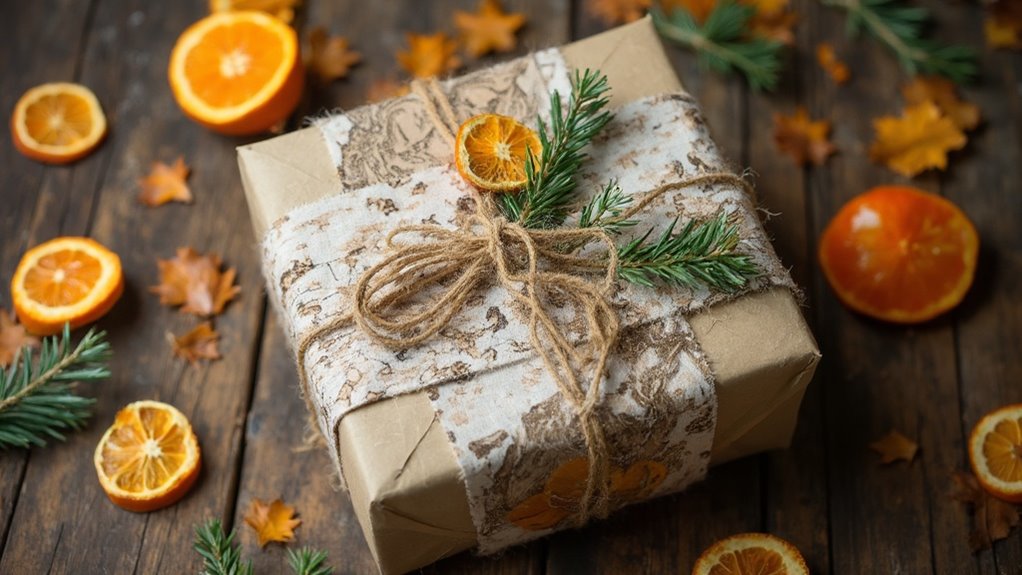
Zero-waste gift wrapping offers countless creative solutions. Traditional Japanese Furoshiki fabric wrapping transforms scarves into elegant presentations, whilst natural elements like leaves and twigs add organic beauty. One might turn old magazines into artistic collages, or create reusable fabric gift bags with drawstring closures. Sustainable alternatives such as vintage tins and handcrafted pottery boxes offer both style and environmental consciousness. These earth-friendly techniques open up a world of artistic gift-giving possibilities.
Traditional Japanese Furoshiki Fabric Wrapping
Traditional gift wrapping so often ends up in landfills, whilst the ancient Japanese art of furoshiki offers an elegant and environmentally-friendly alternative. Dating back to the 8th century Nara period, furoshiki wrapping techniques have evolved from simple ways to protect belongings at public baths into a sophisticated method of presenting gifts with grace and mindfulness.
One discovers that furoshiki fabric choices are wonderfully versatile – from traditional silk and cotton squares to repurposed scarves and vintage textiles. Each piece becomes a gift within a gift, as the recipient can reuse the fabric for their own wrapping or fashion requirements.
The techniques one learns transform simple squares into intricate designs that cradle items of any shape. By embracing this centuries-old practice, one isn't merely wrapping presents; one is participating in a beautiful tradition of sustainability.
Reusable Fabric Gift Bags and Wraps
Three practical options define the world of reusable fabric gift bags and wraps: drawstring pouches, envelope-style wraps, and structured boxes with ties.
You'll find these eco-friendly materials transform your gift-giving experience whilst reducing waste. Drawstring pouches work perfectly for oddly shaped items, whilst envelope-style wraps adapt to various sizes like traditional paper wrapping.
The structured fabric boxes with ties offer elegant fabric storage solutions that recipients can repurpose throughout the year.
Choose organic cotton, hemp, or repurposed vintage fabrics to maximise your environmental impact. You'll discover that these durable alternatives not only eliminate single-use waste but also create a more meaningful exchange – each wrap carries stories and memories as it's passed from one celebration to the next.
Start your collection now, and you'll never need disposable wrapping paper again.
Natural Elements and Botanical Decorations
When nature provides an endless array of decorative options, you'll find the most beautiful gift embellishments right in your own garden.
Transform your gifts into stunning botanical prints by incorporating leaves, twigs, and seasonal elements that connect recipients to the Earth's natural splendour.
Create eye-catching arrangements using these sustainable decorations:
- Tuck sprigs of dried flowers, pine needles, or herbs betwixt twine layers for a rustic, aromatic touch.
- Press colourful autumn leaves onto recycled paper using natural adhesives like cornflour paste.
- Weave delicate vine tendrils or flexible stems around your parcel instead of ribbon.
Upcycled Paper and Magazine Art
Beyond the beauty of natural elements, your home already contains treasure troves of stunning wrapping materials in the form of old magazines, newspapers and decorative paper products. Transform these forgotten items into upcycled crafts that tell unique stories through magazine collages and artistic arrangements.
| Material | Simple Use | Creative Twist |
|---|---|---|
| Magazines | Colour blocks | Photo mosaics |
| Comics | Character wrap | Story panels |
| Sheet music | Plain wrap | Origami accents |
Let your creativity flow as you piece together vibrant images from glossy pages, creating one-of-a-kind wrapping paper that's both meaningful and waste-free. Cut intricate patterns, weave magazine strips, or design themed collages that reflect the recipient's interests. You'll be amazed at how these previously discarded papers can become stunning gift presentations whilst keeping precious resources out of landfills.
Simple Cloth Ribbon Techniques
Beautiful cloth ribbons offer a sustainable alternative to disposable plastic versions, and you'll find countless ways to enhance your gift wrapping with these reusable accents.
By choosing eco-friendly fabrics like organic cotton, hemp, or repurposed silk scarves, you're making a conscious choice to protect our planet whilst adding elegance to your presents.
Transform your gifts with these simple yet stunning techniques:
- Create a classic bow by folding your fabric strip in half lengthwise and tying creative knots at varying angles.
- Weave thin strips of contrasting fabrics together for a plaited effect that adds texture and visual interest.
- Wrap your fabric ribbon around the gift multiple times, creating a criss-cross pattern before securing with a small, discreet knot.
These techniques aren't just beautiful – they're investments in sustainable gift-giving that you'll treasure for years to come.
Sustainable Gift Box Alternatives
Although traditional cardboard gift boxes end up in landfills, you'll find countless creative alternatives that don't harm our planet. Consider using decorative tins, vintage biscuit containers, or antique tea canisters that your loved ones can repurpose long after receiving their gifts.
These sustainable packaging options add character whilst reducing waste.
Transform organic materials into beautiful gift containers by weaving small baskets from dried grass or creating boxes from fallen palm leaves. You can also use eco-friendly materials like bamboo containers or handcrafted pottery that serve as both packaging and part of the gift itself.
For smaller presents, try crafting origami boxes from old magazines or newspapers – they're surprisingly sturdy and add an artistic touch to your thoughtful presentation.
These alternatives not only protect your gifts but also celebrate our connection to nature.
Mindful Presentation Using Everyday Items
Your home already contains countless items perfect for mindful gift presentation. Through creative recycling, you'll discover beautiful wrapping solutions that honour both your gift recipient and the planet.
Let mindful materials guide your choices as you explore everyday treasures hiding in plain sight.
Transform these common items into stunning gift wrap:
- Yesterday's newspaper comics, magazines and maps – create vibrant, personality-filled parcels
- Clean fabric scraps, old scarves and vintage handkerchiefs – embrace the Japanese art of furoshiki
- Brown paper bags, old sheet music and children's artwork – showcase meaningful memories whilst giving new life to paper goods
Frequently asked questions
How Long Can Reusable Gift Wrapping Materials Typically Last Before Needing Replacement?
Quality reusable gift wraps can last 5-10 years with proper care. Durability factors such as fabric type and storage affect replacement frequency, whilst you're saving hundreds of single-use wraps from ending up in landfills.
Are There Specific Fabric Types That Work Better for Zero-Waste Wrapping?
Quality bamboo fabric, organic cotton and linen blends are perfect for eco-friendly gift wrapping – they're durable and quite lovely. One mustn't forget upcycled textiles like old scarves; they're already softened and brilliant for wrapping.
What Eco-Friendly Adhesives Can Replace Traditional Tape for Gift Wrapping?
Natural adhesives such as homemade rice paste, tree sap, or plant-based eco-friendly glue work brilliantly for wrapping presents. Better still, opt for ribbons, twine, or origami-style folds that don't require any sticky substances whatsoever!
How Do You Store Reusable Gift Wrapping Materials to Maintain Their Condition?
Store your reusable wraps in a dedicated storage bin or cupboard to prevent creasing. You'll extend their life by rolling, rather than folding, and keeping them dust-free with storage solutions that prioritise material preservation.
Can Zero-Waste Gift Wrapping Techniques Work for Oddly-Shaped or Very Large Items?
Alternative wrapping solutions work brilliantly for unusual items! Try creative packaging like furoshiki fabric knots for awkward shapes, or utilise reusable materials such as cloth bags, wicker baskets, or decorative boxes that conform to any size.