
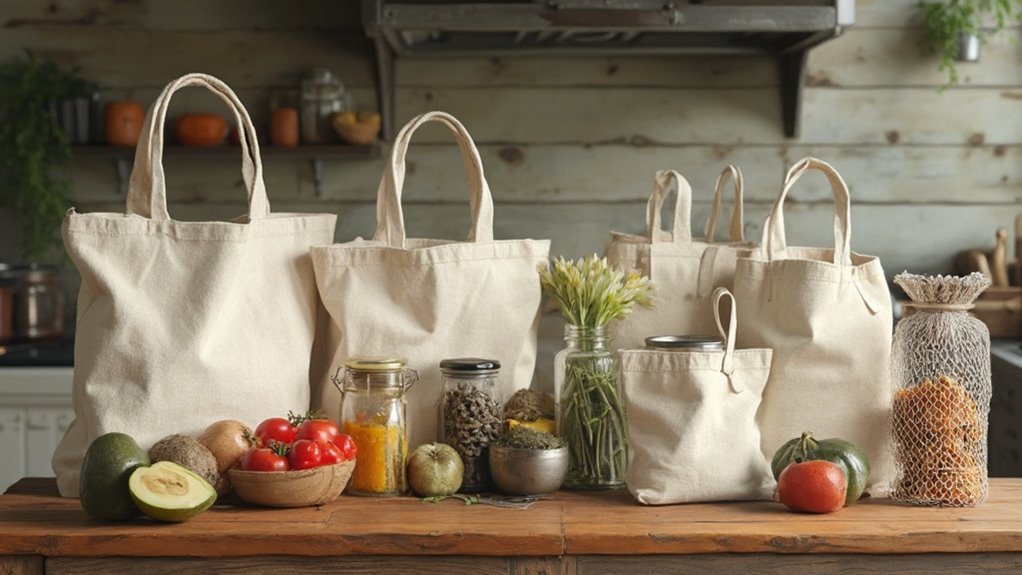
Five essential items transform plastic-free grocery shopping into a seamless, sustainable endeavour. Begin with reusable produce bags crafted from organic cotton or hemp for fruits and vegetables, alongside sturdy shopping totes to transport everything home. Include mesh bags for loose foods, glass jars with airtight seals for storage, and beeswax wraps to maintain freshness. These foundational tools shall revolutionise your shopping routine into an eco-friendly experience whilst reducing unnecessary waste.
Reusable Produce Bags and Shopping Totes
When switching to plastic-free grocery shopping, reusable produce bags and shopping totes serve as your foundation for sustainable shopping habits.
You'll want to invest in lightweight mesh produce bags made from eco-friendly materials like organic cotton or hemp, which allow your fruit and vegetables to breathe whilst keeping them contained. These breathable designs help prevent premature spoilage and eliminate single-use plastic waste.
For your main shopping totes, choose durable options crafted from sustainable designs that can withstand repeated use.
Look for reinforced seams, washable fabrics, and comfortable handles that distribute weight evenly. You'll find that cotton canvas, jute, and recycled materials offer excellent durability whilst maintaining a minimal environmental footprint.
Keep several totes in your car and by your front door to ensure you're never caught without them.
Glass Jars and Storage Containers
Beyond reusable bags, glass jars and containers form the next cornerstone of plastic-free grocery shopping. You'll find these vessels indispensable for storing bulk items, with several glass jar benefits including complete transparency, chemical-free storage, and decades of reusability. The proper storage container options will transform how you shop and preserve food.
| Container Type | Best Uses | Typical Lifespan |
|---|---|---|
| Kilner Jars | Dry Goods, Preserves | 10+ years |
| Flip-Top Jars | Spices, Tea | 8+ years |
| Weck Jars | Liquids, Ferments | 12+ years |
| Le Parfait | Grains, Flour | 15+ years |
| Storage Clamp | Coffee, Nuts | 10+ years |
Choose containers with airtight seals for optimum freshness. You'll want various sizes: 120-millilitre jars for spices, 570-millilitre sized for weekly staples, and 2-litre vessels for bulk items like rice and pulses.
Mesh Bags for Bulk Foods
Mesh produce bags serve as essential tools for plastic-free bulk shopping, letting you easily transport and weigh loose items like grains, nuts, and dried fruits.
When choosing your mesh bags, look for eco-friendly materials like organic cotton or hemp that will stand up to repeated use and washing.
Essential knowledge for successful bulk shopping with mesh bags:
- Weigh your empty bags before shopping and write the tare weight on the attached label.
- Choose bags with a tight enough weave to contain small items like quinoa or chia seeds.
- Keep multiple sizes to hand – smaller bags for spices, larger ones for pulses and pasta.
These reusable bags quickly become indispensable tools in your zero-waste journey, making bulk shopping both practical and sustainable.
Beeswax Wraps and Food Covers
Since cling film creates unnecessary waste, beeswax wraps offer an excellent natural alternative for covering bowls, wrapping sandwiches, and preserving fresh produce.
You'll find these eco-friendly alternatives are infused with antimicrobial properties that help keep your food fresh longer. The beeswax benefits extend beyond preservation – they're washable, reusable, and typically last up to a year with proper care.
To use your wraps effectively, warm them slightly with your hands to create a seal. They'll mould perfectly around containers or food items, using just your body heat.
When they begin to lose their cling, you can often rejuvenate them by reheating in a low-temperature oven. Remember to wash them in cool water with mild washing-up liquid, as hot water can compromise the wax coating.
Mason Jars and Bottle Options
While plastic containers continue to dominate kitchen storage, mason jars and glass bottles represent the cornerstone of sustainable food storage solutions.
You'll find these versatile vessels offer numerous benefits, from preserving food freshness to preventing chemical leaching. They're perfect for storing bulk goods, homemade sauces, and fermented foods.
Consider these essential bottle alternatives for your zero-waste journey:
- Wide-mouthed preserving jars for easy scooping of dry goods like nuts, grains, and flour
- Kilner bottles with clip-top lids for storing liquids, oils, and homemade dressings
- Small quilted preserving jars for spices, herbs, and preserves
Once you've built your collection, you'll discover these containers aren't just practical – they transform your larder into an aesthetically pleasing display whilst keeping your food fresh and chemical-free.
Cloth Napkins and Paper Alternatives
Beyond storage solutions, the everyday act of dining presents another opportunity to reduce waste in your kitchen.
You'll find that switching to cloth serviettes creates an immediate impact on your household's paper consumption whilst elevating your sustainable dining experience. Consider investing in organic cotton or hemp serviettes, which offer superior durability and become softer with each wash.
For eco-friendly alternatives to kitchen roll, keep a dedicated drawer of clean cotton cleaning cloths ready for spills and kitchen messes.
You might also appreciate the versatility of Swedish dishcloths, which combine the best qualities of sponges and traditional cloths whilst remaining compostable at the end of their lifespan.
When selecting textile options, choose natural fibres that can handle frequent washing and will biodegrade when they eventually wear out.
Frequently asked questions
How Can I Start a Plastic-Free Lifestyle if My Local Stores Don't Support It?
Most local farmers' markets welcome your own reusable containers, making them a brilliant starting point. Order from British zero-waste shops online for bulk purchases, and build connections with local shopkeepers who'll support your plastic-free endeavours. Remember that whilst supermarkets might be slow to change, each small effort makes a difference.
What Should I Do With Existing Plastic Containers Before Switching to Plastic-Free Alternatives?
Don't rush to discard your existing plastics. You'll want to reuse them until they're worn out, then explore recycling options. Meanwhile, consider repurposing ideas like storage containers or plant pots for your garden.
Are Plastic-Free Alternatives More Expensive in the Long Run?
Whilst you'll notice higher upfront costs during a cost comparison, you'll find significant long-term savings since plastic-free alternatives last longer and don't need frequent replacement. They're actually gentler on your wallet overall.
How Do I Convince My Family Members to Adopt Plastic-Free Shopping Habits?
Simply lead by example and share your sustainable habits through gentle family education. Show them how small changes make sizeable impacts. You'll naturally inspire them when they observe your commitment and positive results whilst shopping sustainably.
Which Retailers Offer the Best Discounts for Bringing Reusable Shopping Containers?
The best container discounts are available through store loyalty programmes at Whole Foods, Sprouts and local co-operatives. Their bulk purchasing options typically offer 10-15 pence off per container you bring from home.