
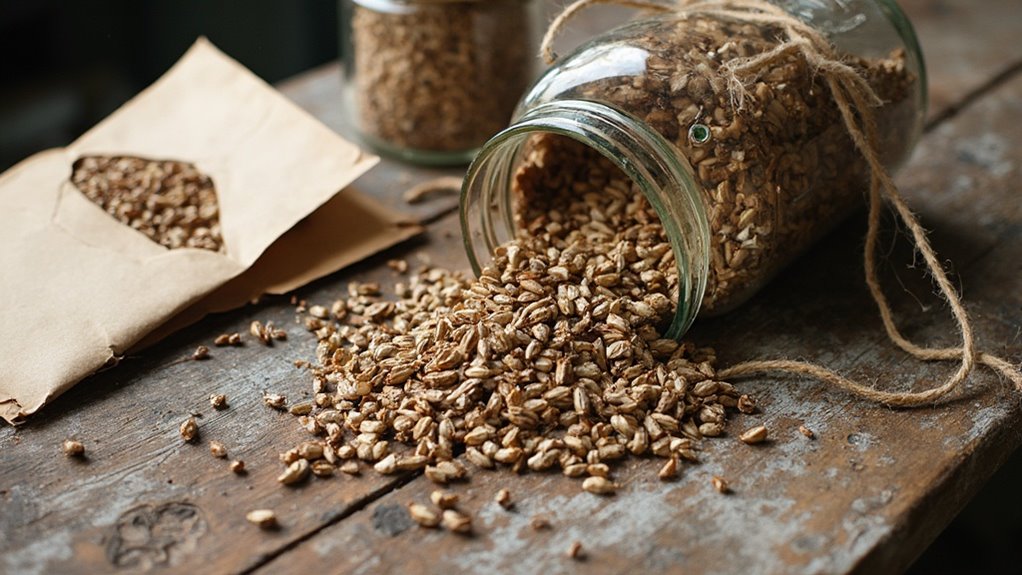
Organic seed preservation safeguards your seeds' genetic integrity whilst avoiding synthetic chemicals that can harm future plant generations. You'll maintain seed viability through natural drying methods, traditional storage vessels, and careful environmental control. By utilising organic techniques like wood ash and dried herbs for pest management, you're protecting both the seeds and the environment. When you embrace these time-tested methods, a world of sustainable seed saving practises awaits your discovery.
The Benefits of Chemical-Free Seed Storage
Whilst conventional seed storage often relies on synthetic preservatives and fungicides, chemical-free methods offer distinct advantages for both seed viability and environmental health.
When storing seeds naturally, one avoids exposing them to potentially harmful substances that can affect their long-term importance and genetic integrity.
Understanding Natural Drying Methods
Seeds can be properly dried through natural methods in keeping with traditional approaches. Spread the seeds in a single layer on unbleached paper or natural cloth, placing them in a well-ventilated area away from sources of moisture.
Whilst sun exposure can be beneficial, one must exercise caution. Position seeds in filtered sunlight during morning hours when temperatures remain moderate. The aim is gentle dehydration, not rapid moisture loss that might damage the seed's internal structure.
Monitor seeds daily, gently stirring them to ensure even drying. They're ready when they feel completely dry to the touch and produce a subtle rattling sound when shaken.
Traditional Wisdom in Seed Preservation
Through centuries of practice, indigenous communities worldwide have developed reliable seed preservation methods that remain relevant today. This cultural heritage continues to influence modern organic seed preservation, offering invaluable insights into biodiversity conservation.
One shall find that these time-tested techniques often work in harmony with nature's rhythms.
- Store seeds in handcrafted clay vessels to maintain consistent temperature and humidity levels whilst allowing natural air circulation.
- Mix seeds with wood ash or dried herbs to protect against pests, following ancestral practices.
- Utilise traditional lunar calendars to determine ideal times for seed collection and storage.
- Wrap seeds in natural fibres like cotton or banana leaves, creating breathable packages that prevent moisture build-up.
These methods aren't merely sustainable—they're a reflection of human ingenuity and our deep connection to the earth's natural cycles.
Creating the Perfect Storage Environment
Since ideal seed storage conditions directly impact germination rates, creating the perfect environment requires careful attention to three critical factors: temperature, humidity and light exposure.
You'll want to maintain consistent temperature regulation between 0-5°C for most seeds, as fluctuations can trigger premature germination or damage seed vitality.
For humidity control, you should keep levels between 20-30% using silica gel sachets or rice grains as natural desiccants.
Store your seeds in darkness, as light exposure can degrade their internal compounds and reduce their effectiveness.
Your storage containers matter too – choose breathable paper envelopes or glass jars with well-fitted lids.
Place these in a dedicated space away from direct sunlight, perhaps in your cellar or a cool cupboard where temperature and humidity remain stable year-round.
Common Challenges in Organic Seed Saving
Even with proper storage conditions in place, organic seed saving presents several natural obstacles that can test your preservation efforts.
When maintaining genetic diversity without synthetic protectants, you'll need to understand and adapt to nature's challenges.
- Pest management becomes complex as you'll need to guard against insects and rodents using natural deterrents like diatomaceous earth or dried herbs.
- Cross-pollination between varieties can compromise seed purity, requiring careful planning of planting distances and timing.
- Weather fluctuations can affect both seed maturation and storage conditions, demanding constant monitoring.
- Seed-borne diseases can spread through your collection if you're not vigilant about selecting healthy parent plants.
You'll find success by staying observant and responding to these challenges with patience and natural solutions, preserving your seeds' health for future growing seasons.
Building a Sustainable Seed Library
Whilst establishing a personal seed library requires careful planning, the rewards of maintaining your own genetic diversity hub are immense.
You'll need to create a detailed cataloguing system, tracking each variety's origin, growing requirements, and harvesting dates. Store your seeds in airtight containers away from light and moisture, maintaining consistent temperature and humidity levels.
Consider expanding your collection through seed exchange networks, where you'll connect with other preservation-minded gardeners. Your library can become a valuable community resource, fostering local food security and agricultural biodiversity.
You'll find that community involvement strengthens your preservation efforts, as shared knowledge often leads to improved growing techniques and broader variety selection. Document your successes and challenges, creating a living record upon which future generations can build.
Best Practices for Long-Term Viability
To guarantee ideal seed longevity, you'll need to master three critical storage variables: temperature, humidity, and light exposure. Understanding these elements will help you maintain optimal seed viability through proper preservation methods.
- Store your seeds at consistently cool temperatures between 0-5°C, using your refrigerator's salad drawer for ideal conditions.
- Keep humidity levels below 40% by utilising moisture-absorbing silica gel packets or rice grains in your storage containers.
- Protect seeds from light exposure by storing them in opaque, airtight containers – amber glass jars work brilliantly.
- Check your stored seeds every six months for signs of moisture, mould, or pest activity.
When you follow these storage guidelines carefully, you'll find that your seeds can maintain their essentiality for years, sometimes even decades, depending on the species.
Frequently asked questions
How Do Organic Seed Preservation Methods Impact Genetic Diversity?
When one preserves seeds organically, one is actively supporting genetic resilience by maintaining pure, unmodified plant lineages. This strengthens biodiversity conservation efforts and helps protect essential genetic traits for future generations.
Can Organic Seeds Be Safely Exchanged Between Different Climate Zones?
Seeds should be carefully vetted for climate adaptation when exchanging between zones. Whilst it's possible, one ought to test seed viability beforehand and gradually acclimatise varieties to ensure they will thrive in their new environment.
What Role Do Beneficial Microorganisms Play in Organic Seed Preservation?
Beneficial microorganisms actively enhance one's seeds' health through essential microbial interactions. They strengthen natural defences, improve soil health, and create protective barriers that shield precious seeds during storage.
Are There Specific Certification Requirements for Marketing Organically Preserved Seeds?
Seeds must meet rigorous organic certification standards from recognised bodies, ensuring they are grown and preserved without synthetic chemicals. Organic labelling requires detailed documentation of preservation methods and growing practises. Whilst the USDA sets standards in America, UK producers should follow Soil Association or OF&G (Organic Farmers & Growers) certification requirements.
How Does Moon Phase Timing Affect Organic Seed Collection and Storage?
Seeds collected during a waning moon phase tend to yield drier, better-preserved specimens. The moon's gravitational pull affects moisture levels, making it an optimal time for seed collection and storage.