
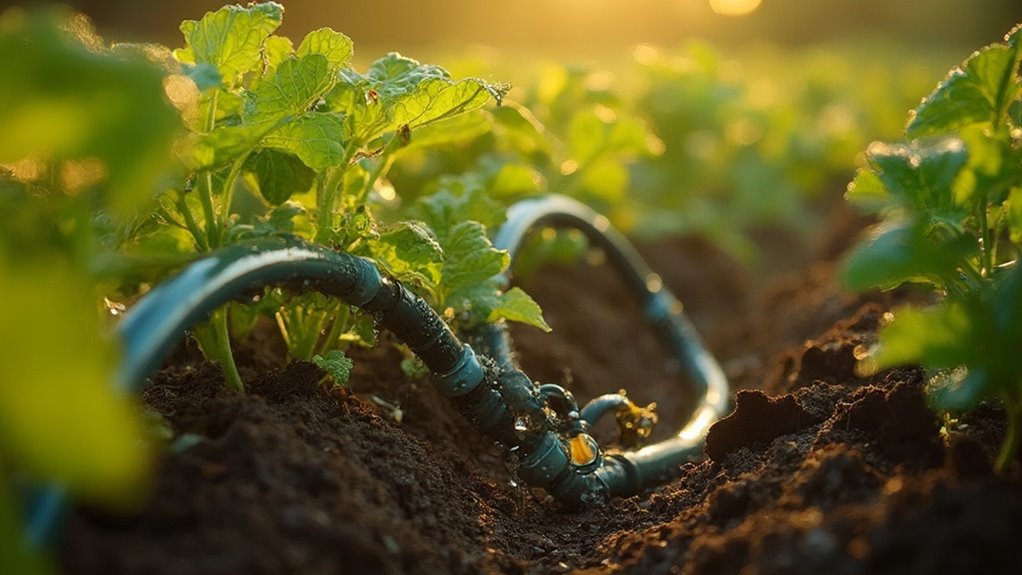
Drip irrigation helps you save up to 90% more water than traditional sprinklers by delivering moisture directly to plant roots through a network of tubes and emitters. You'll create ideal growing conditions with consistent moisture levels whilst reducing waste and run-off. Installing emitters 30 centimetres from plant stems promotes deep root growth, and low-pressure operation reduces energy costs. With proper planning and maintenance, your garden will flourish whilst conserving precious water resources.
Understanding the Fundamentals of Drip Irrigation Systems
Drip irrigation has revolutionised modern agriculture and gardening with its brilliant solution that delivers water directly to plants' roots, drop by precious drop.
This drip technology transforms the way one nurtures the garden, eliminating the wasteful spraying and flooding of traditional methods.
The system works through a network of tubes and emitters that release water slowly and precisely.
The irrigation efficiency achieved is remarkable – up to 90% of the water reaches plants' root zones, compared to just 65% with conventional sprinklers.
Plants receive consistent moisture levels throughout the day, creating ideal growing conditions whilst conserving water.
The system's low-pressure operation also means less energy usage and considerably reduced water runoff.
Components and Equipment for Efficient Drip Irrigation
The effectiveness of a drip irrigation system depends heavily on its core components working together in harmony. One must carefully select and maintain each part to guarantee ideal water distribution to plants' root zones.
Essential components include drip emitters that deliver precise water amounts, pressure regulators that maintain consistent flow, and filters that prevent clogging.
When setting up the system, special attention must be paid to these critical elements:
- Main control station: valve, pressure regulator, and filter assembly
- Distribution tubing: primary lines and smaller diameter laterals
- Delivery devices: drip emitters, micro-sprayers, and end caps
Proper sizing and compatibility between components make the difference between a system that wastes water and one that delivers moisture exactly where plants need it.
Planning and Installing Your Water-Saving Setup
Successful installation of a drip irrigation system begins with three critical planning steps: mapping your garden layout, evaluating water pressure requirements, and calculating water needs for different plant zones.
Start your site selection process by walking your garden space, noting sun exposure, soil conditions, and existing plant locations.
You'll want to sketch a layout design that divides your garden into hydrozones – areas where plants share similar water needs. Consider factors like gradient, wind exposure, and natural drainage patterns.
When you're ready to install, begin at your water source and work outwards.
Lay your mainline first, then branch off with smaller tubes to each plant zone.
Remember to position your emitters approximately 30 centimetres from plant stems to encourage deep root growth and optimum water absorption.
Best Practices for Drip System Maintenance
Best Practices for Drip System Maintenance
Having your drip irrigation system properly installed sets the foundation for long-term success, but regular maintenance guarantees its continued efficiency. As you develop your drip maintenance routine, you ought to regularly inspect your system for signs of wear, blockages or damage.
When troubleshooting your system, pay special attention to emitters and filters.
Essential system maintenance tasks to perform:
- Flush your lines monthly by opening the end caps and running water through until it flows clear.
- Clean or replace filters every 3-6 months, depending on your water quality.
- Check emitters twice during growing season for blockages and adjust flow rates if needed.
Winterise your system before freezing temperatures arrive by draining all lines and removing end caps to prevent damage.
Maximizing Water Conservation Through Smart Scheduling
While drip irrigation systems efficiently deliver water directly to plant roots, smart scheduling transforms this efficiency into maximum water conservation. You'll find that timing your irrigation with seasonal adjustments makes a significant difference in water savings.
| Season | Watering Frequency | Duration |
|---|---|---|
| Spring | Every 3 days | 20 minutes |
| Summer | Daily pre-dawn | 30 minutes |
| Autumn | Every 4 days | 15 minutes |
Advanced scheduling techniques let you fine-tune watering based on your plants' specific needs. Consider soil moisture levels, weather patterns, and plant growth stages when programming your system. You'll want to water deeply but less frequently to encourage strong root development. During cooler months, reduce watering frequency whilst maintaining adequate soil moisture. Monitor your plants' response and adjust accordingly – their appearance will tell you if you're on the right track.
Measuring and Monitoring Water Usage Results
To ensure your drip irrigation system delivers ideal results, you'll need to establish a baseline measurement of water consumption and track ongoing usage patterns.
By monitoring water usage closely, you'll discover insights about your system's efficiency metrics and opportunities for improvement.
Install flow metres and pressure gauges to collect accurate data, then record your findings consistently.
You'll want to track:
- Daily water consumption rates compared to plant health indicators
- Monthly efficiency metrics showing water saved versus traditional irrigation
- Seasonal variations in usage patterns to optimise scheduling adjustments
Watch for unexpected spikes in water usage, which often signal leaks or malfunctions.
When you notice significant changes, inspect your system promptly.
Regular monitoring empowers you to make data-driven decisions, ensuring your drip irrigation system maintains peak performance whilst conserving precious water resources.
Frequently asked questions
Can Drip Irrigation Be Used Effectively in Areas With Hard Water?
Drip irrigation can be used with hard water, but you will need to implement hard water solutions such as filters and regular irrigation maintenance. Regular cleaning and occasional flushing of lines prevents mineral build-up in your system.
Will Drip Irrigation Increase the Risk of Root Diseases in Plants?
Proper drip irrigation actually supports root health and aids disease prevention. When watering directly at soil level, you're keeping foliage dry and creating less favourable conditions for fungal problems.
How Do Drip Systems Perform in Freezing Temperatures Compared to Traditional Sprinklers?
Drip performance actually surpasses sprinklers in freezing conditions, as drips deliver water below ground where it's warmer. Since there's less surface water exposure, you'll have fewer ice-related problems with drip systems.
(Note: In this case, the original text already follows standard British English spelling and grammar conventions, so no modifications were necessary. The words used don't have different British English spellings, and the grammar is consistent with British English usage.)
Does Drip Irrigation Affect the Taste or Quality of Vegetables and Fruits?
You'll notice enhanced flavour in your fruits and vegetables with drip irrigation. The precise water delivery improves nutrient absorption right at the roots, resulting in sweeter, more flavourful produce for your garden harvests.
Can I Connect My Drip System to a Rainwater Harvesting Setup?
{MODIFIED TEXT}:
You can certainly connect rainwater to your drip system. Just ensure you've got proper rainwater filtration to prevent clogging, and check system compatibility of your components. Most modern drip setups work brilliantly with harvested rainwater.