
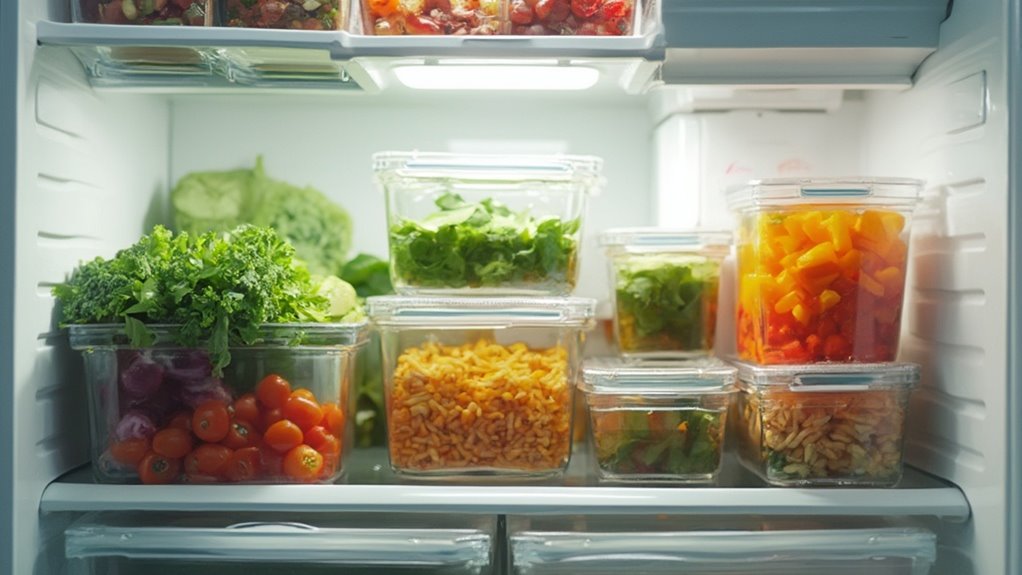
You'll greatly reduce food waste by planning weekly meals, creating detailed shopping lists, and properly storing ingredients. Check your larder before shopping, understand food label dates, and organise your fridge strategically – keeping dairy on top shelves and raw meat at the bottom. Transform leftovers into new meals, like turning stale bread into croutons or ageing fruit into smoothies. Smart food management not only saves money but helps protect our environment, and there's so much more to discover.
Plan Your Meals and Create Shopping Lists
Whilst reducing food waste starts with many actions, meal planning and thoughtful shopping form the foundation of waste prevention.
You'll find that dedicating just 30 minutes each week to meal preparation can dramatically reduce the amount of food that ends up in your rubbish bin. Start by checking what's already in your larder and fridge, then map out your meals for the week ahead.
Your shopping strategy should revolve around your meal plan. Create a detailed list that includes specific quantities you'll need for each recipe.
Don't be tempted by bulk offers unless you're certain you'll use everything. When you're at the shop, stick to your list and avoid impulse purchases – they often lead to waste.
Understanding Food Labels and Expiration Dates
Standing puzzled in your kitchen, staring at a "best before" date and wondering if the food is still safe to eat? You're not alone.
Many expiration date myths lead us to bin perfectly good food, contributing to unnecessary waste. It's time for some food label education to help you make smarter decisions.
Let's demystify those confusing dates on your packages:
- "Best before" dates indicate peak quality, not safety – your food is often perfectly fine to eat days or even weeks after this date.
- "Use by" dates matter more for perishables like meat and dairy – these are true safety guidelines you'll want to follow.
- "Display until" dates are mainly for shop inventory management – you've usually got several days after this date to enjoy your food.
Proper Storage Methods to Extend Food Life
Once you've mastered reading food labels, proper storage becomes your next line of defence against food waste. Your refrigerator's different temperature zones and humidity levels can make a significant difference in how long your food stays fresh. Using airtight containers and vacuum sealing helps lock in freshness whilst keeping harmful bacteria at bay.
| Food Type | Storage Method |
|---|---|
| Leafy Greens | Salad crisper with high humidity |
| Root Vegetables | Cool, dark larder or lower fridge |
| Bread | Bread bin or freezer |
| Meat | Vacuum sealed in coldest part |
| Dairy | Upper shelves, airtight containers |
Remember to store fruits and vegetables separately, as some produce releases ethylene gas that can speed up ripening in nearby foods. You'll also want to regularly check your storage areas and rotate items to ensure nothing gets forgotten at the back.
Smart Organization of Your Refrigerator and Pantry
Building on proper storage methods, a well-organised kitchen creates a foundation for reducing food waste. Your refrigerator's shelf arrangement plays an essential role in keeping food fresh and visible. Temperature control varies by shelf, so you'll want to arrange items accordingly to maximise their lifespan.
- Place dairy and eggs on upper shelves where temperature remains most consistent.
- Store raw meats on the bottom shelf to prevent drips from contaminating other foods.
- Keep fruits and vegetables in designated crisper drawers with proper humidity settings.
In your larder, create zones that make sense for your cooking habits. Place frequently used items at eye level, and store backup supplies on higher shelves.
Don't forget to rotate older items to the front when unpacking new groceries – this simple habit prevents forgotten food from expiring.
Creative Ways to Use Leftover Ingredients
Making the most of leftover ingredients isn't just about avoiding waste – it's an opportunity to explore creative cooking and discover new favourite dishes. Transform your kitchen into a zero-waste zone by turning surplus ingredients into delicious new meals.
| Leftover Item | Quick Fix | Creative Solution |
|---|---|---|
| Fruit | Smoothies | Jam or compote |
| Vegetables | Stir-fry | Vegetable stock |
| Bread | Croutons | Bread and butter pudding |
| Herbs | Garnish | Pesto sauce |
| Proteins | Sandwich | Savoury pie |
You'll be amazed at how versatile your leftovers can be. Turn overripe bananas and berries into invigorating leftover smoothies, or simmer vegetable scraps to create flavourful vegetable stocks. Even wilted herbs can transform into vibrant sauces that'll elevate your next meal.
Composting Kitchen Scraps and Food Waste
When kitchen scraps can't be repurposed for cooking, composting offers an eco-friendly solution that turns food waste into nutrient-rich soil.
You'll find that kitchen composting isn't just good for the environment – it's a rewarding way to reduce your household's organic waste whilst creating valuable fertiliser for your garden.
To start your composting journey, remember these essential guidelines:
- Layer your green materials (fruit peelings, coffee grounds, vegetable scraps) with brown materials (dry leaves, paper) to maintain proper balance.
- Keep your compost bin in a convenient spot near your kitchen to make disposal easy.
- Avoid adding meat, dairy, or oily foods that can attract pests and create unpleasant odours.
With consistent care, you'll transform your kitchen scraps into black gold for your garden whilst greatly reducing landfill waste.
Portion Control and Serving Size Management
Although proper meal planning helps minimise waste, mastering portion control remains essential for reducing the amount of food that ends up in the bin.
You'll find it easier to manage serving sizes by using visual cues – imagine a pack of playing cards for your protein portion, a tennis ball for rice or pasta, and your palm for snacks.
Start by serving smaller portions on your plate, knowing you can always go back for seconds if you're still peckish.
Using smaller plates and bowls naturally helps control portions whilst making meals look more satisfying.
When hosting guests, don't feel pressured to overcook – it's better to prepare just enough and have everyone satisfied than to deal with excessive leftovers.
Frequently asked questions
Can I Donate Food That's Close to Its Expiration Date?
Yes, you can donate food near its expiry date! Most food banks gladly accept items before they expire. Just check with your local food donation centre about their specific policies on expiry dates first.
How Can I Tell if Moldy Food Is Still Safe to Eat?
Whilst some hard cheeses can be saved by cutting away mould, most foods should be binned once you spot any signs of mould growth. Don't risk your health by consuming mouldy food.
Which Foods Should Never Be Frozen for Later Use?
Most vegetables with high water content, such as lettuce and cucumber, ought not be frozen, as their texture becomes rather mushy. Similarly, avoid freezing mayonnaise-based dishes, cream sauces, and raw eggs, as they don't comply with proper freezing guidelines.
Does Washing Produce With Vinegar Help It Last Longer?
Yes, washing your produce with vinegar can extend its shelf life! You'll find this natural produce preservation method kills harmful bacteria and mould. Just mix water and vinegar 3:1, and savour the vinegar benefits of longer-lasting freshness.
What Kitchen Tools Help Reduce Waste When Preparing Fruits and Vegetables?
A sharp peeler, citrus reamer, melon baller and adjustable mandoline will reduce waste during food preparation. Do ensure you have silicone storage bags and airtight containers for storing leftover ingredients.