
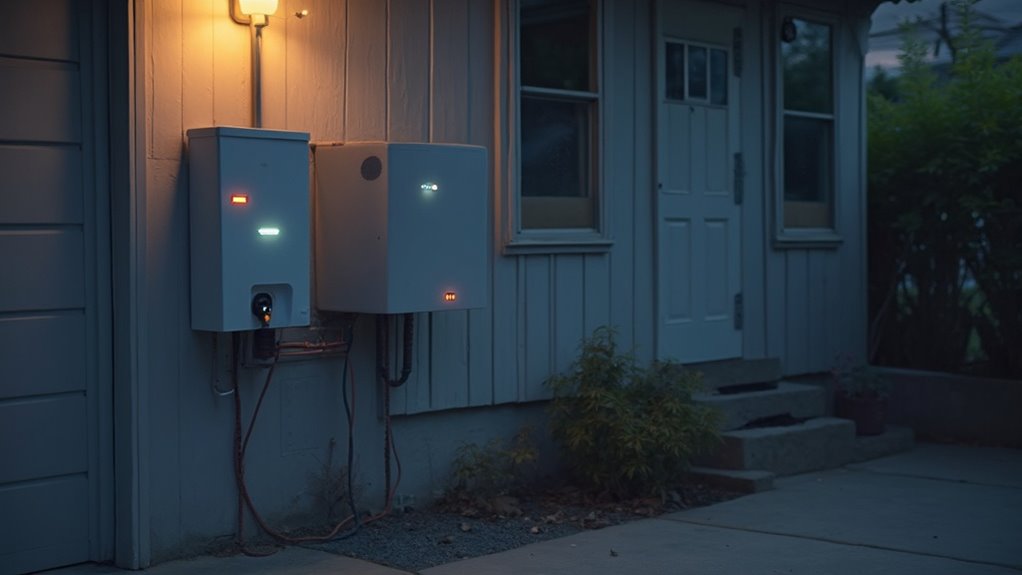
Home battery storage can notably reduce your electricity costs through strategic energy management. You'll save by storing low-cost off-peak power for use during expensive peak hours, whilst capturing excess solar energy for night-time use. The system provides valuable backup power during power cuts and increases your energy independence from the mains supply. With minimal maintenance requirements and potential government grants, battery storage offers both immediate and long-term financial benefits that you'll want to explore further.
Understanding Home Battery Storage Economics
Whilst many homeowners are drawn to battery storage for backup power, understanding the financial aspects is essential before making this investment.
You'll need to evaluate how your battery capacity aligns with your daily energy usage patterns and local energy pricing structures.
To maximise savings, consider when your utility charges peak rates versus off-peak rates. Your battery system can store cheaper electricity during off-peak hours and power your home when rates are highest. This strategy, known as rate arbitrage, can lead to meaningful savings over time.
You'll also want to factor in your local utility's policies on solar feed-in tariffs and demand charges. If you already have solar panels, a battery can help you store excess daytime production instead of selling it back to the grid at lower rates.
Peak Rate Avoidance and Load Shifting Benefits
Since electricity costs typically peak during high-demand periods, a home battery system lets you strategically shift your energy consumption to lower-cost times. By storing energy when rates are low and utilising it during expensive peak hours, you're practising what's known as peak shaving – a clever way to reduce your utility bills.
Your battery system can automatically respond to demand response signals from your utility company, drawing power when it's cheapest and abundant.
You'll store this energy for use during peak rate windows, typically in the early morning and evening hours. This load shifting not only saves you money but also helps reduce strain on the power grid during high-demand periods.
It's a win-win approach that benefits both your finances and your community's energy infrastructure.
Grid Independence and Backup Power Value
Beyond saving money through rate optimisation, home battery systems offer valuable protection against grid disruptions. You'll gain peace of mind knowing your lights stay on during outages whilst maintaining power to essential appliances. For those interested in off-grid living, batteries provide a path towards energy independence when paired with solar.
| Backup Power Benefits | Emergency Preparedness | Grid Independence |
|---|---|---|
| Keep lights on | Power medical devices | Solar integration |
| Run refrigeration | Maintain communications | No utility needed |
| Power electronics | Heat/cool your home | Energy autonomy |
| Charge devices | Access water pumps | Predictable costs |
| Enable cooking | Support security systems | Future-proof home |
Your battery system serves as a reliable foundation for emergency preparedness, ensuring your family's comfort and safety during grid failures. It's an investment in resilience that transforms your home into a self-sustaining haven.
Solar Integration and Energy Optimization
As solar panels harness daylight, a battery system maximises their value by storing excess energy for night-time use.
You'll capture more of your solar power production instead of sending it back to the grid, increasing your energy independence and reducing waste.
Smart energy management systems help you optimise this stored power, automatically drawing from your batteries when grid rates are highest.
You can programme your system to prioritise stored energy during peak demand periods, typically in the evening when solar production drops but household usage spikes.
This strategic approach helps you avoid expensive time-of-use rates whilst maintaining a reliable power supply.
Maintenance Costs and System Longevity
Whilst home battery systems require minimal day-to-day attention, you'll need to factor in some maintenance costs over their lifespan.
Most modern systems include remote monitoring capabilities, alerting you to potential issues before they become serious problems. You can expect a maintenance frequency of once or twice per year for routine checks and cleaning.
Your battery's lifespan typically ranges from 10-15 years, during which you might need occasional system upgrades to keep up with advancing technology. These upgrades can actually extend your system's life whilst improving its efficiency.
The main maintenance tasks include checking connections, updating software, and ensuring proper ventilation.
Whilst professional inspections aren't free, they're a small investment compared to the long-term savings and reliability you'll gain from a well-maintained home battery system.
Government Incentives and Tax Benefits
When investing in a home battery system, you'll discover numerous financial incentives designed to offset your initial costs. Government grants and subsidies can cover up to 30% of your system's purchase and installation expenses through various schemes, making your shift to energy independence more affordable.
Your local authority may offer additional incentives, including tax relief, grants, or performance-based rewards that further reduce your out-of-pocket expenses.
Many energy companies also provide special tariffs and programmes for homeowners with battery storage systems. You'll want to research local incentive programmes early in your planning process, as some have limited funding or specific enrolment periods.
Return on Investment Analysis
Understanding your home battery system's return on investment requires careful analysis of multiple financial factors.
You'll need to evaluate your current electricity tariffs, peak usage patterns, and projected energy costs to create an accurate financial forecasting model.
When conducting your cost-benefit comparison, consider both immediate and long-term savings.
Factor in reduced utility bills, potential income from grid services, and lower exposure to future tariff increases.
Don't forget to account for battery degradation over time and maintenance costs.
Your ROI timeline typically ranges from 5-10 years, depending on your local electricity tariffs and usage patterns.
In areas with time-of-use pricing or frequent power cuts, you'll likely see faster returns.
Remember that environmental benefits, whilst harder to quantify, add significant value to your investment.
Frequently asked questions
Can Home Battery Storage Units Be Installed in Apartments or Condominiums?
You'll need to check your flat compatibility and condominium regulations first. Whilst it's possible to install battery storage in these spaces, you'll likely need landlord approval and proper authorisation before proceeding.
What Happens to Battery Performance in Extreme Weather Conditions?
You'll notice your battery's performance can suffer in extreme temperatures. Heat accelerates performance degradation, whilst cold weather reduces capacity. It's best to keep your storage system in temperature-controlled spaces for optimal functioning.
How Noisy Are Home Battery Storage Systems During Operation?
Home battery systems operate at very low noise levels, much like a quiet whisper. The operational sounds are minimal, typically around 30-40 decibels, quieter than your fridge's normal hum.
Are There Specific Insurance Requirements for Home Battery Storage Systems?
In England, you must inform your insurance provider about your battery system. Most standard home insurance policies cover batteries, but you should verify coverage limits and may need additional protection for complete peace of mind.
Can Multiple Homes Share a Single Battery Storage System?
Yes, you can participate in shared battery systems through community energy solutions. It's becoming more common for neighbourhoods to pool resources and share a larger battery system, maximising efficiency and reducing individual costs.