
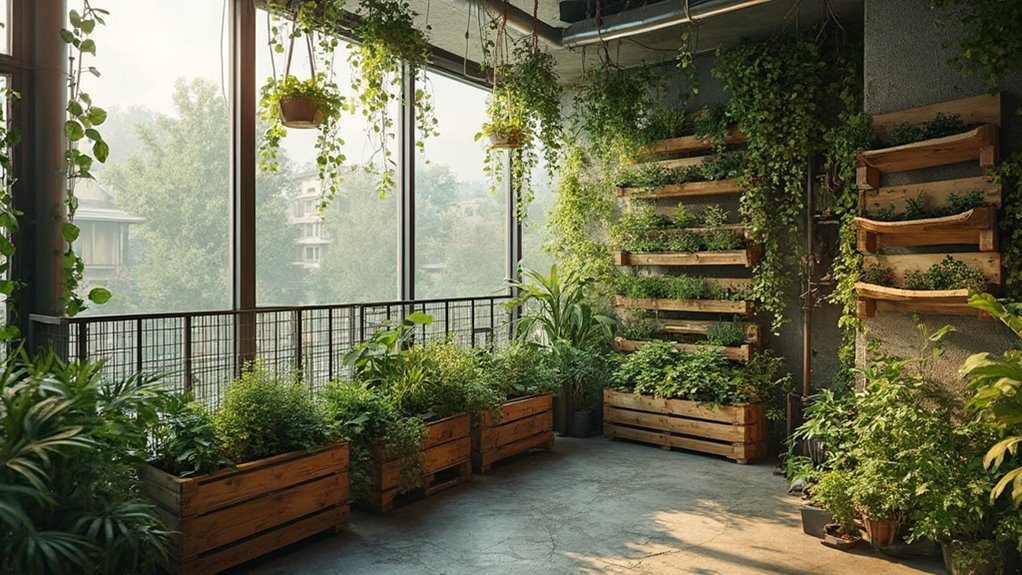
Transform your balcony into a thriving vertical garden by maximising limited space with innovative growing solutions. You'll need quality tools, well-draining soil, and mounting hardware to create living walls using pallets or pocket planters. Consider herbs like rosemary and thyme, flowering plants such as petunias, and compact vegetables like cherry tomatoes. Smart irrigation systems and self-watering containers make maintenance easier. Exploring vertical gardening opens up endless possibilities for your urban oasis.
Benefits of Vertical Gardening in Limited Spaces
Whilst traditional gardening requires extensive ground space, vertical gardening offers an elegant solution for urban dwellers with limited outdoor areas. One discovers that utilising vertical space transforms one's balcony into a sustainable gardening haven whilst maximising every square centimetre.
By growing upward, one creates layers of greenery that not only beautify the space but also contribute to urban biodiversity.
One's vertical garden acts as a natural insulator, helping regulate the home's temperature and reducing energy costs. One enjoys improved air quality as plants filter pollutants, and the verdant walls provide a peaceful sanctuary in the midst of city life.
The proximity of one's garden also means ready access to fresh herbs and vegetables, making it simpler to maintain a connection with nature despite living in an urban environment.
Essential Tools and Materials for Balcony Vertical Gardens
The foundation of a successful vertical garden begins with selecting the proper tools and materials for your balcony setup.
You'll need quality gardening tools, including secateurs, a small trowel, and a watering can with a narrow spout for precise irrigation. Consider adding a spray bottle for misting delicate plants and a soil moisture metre to monitor water needs.
Your soil selection is vital for vertical gardens, as containers need well-draining potting compost specifically formulated for container growing.
You'll also want to gather mounting hardware, containers with proper drainage, and trellises or wall-mounted planters that can withstand outdoor conditions.
Don't forget essential supplies like plant ties, landscaping fabric for lining containers, and a collection of hooks or brackets suitable for your balcony's structure.
DIY Pallet Garden Wall Systems
Creating a pallet garden wall represents one of the most cost-effective and versatile vertical gardening solutions for your balcony.
You'll find that standard wooden pallets, when properly prepared and mounted, can transform into stunning living walls that enhance your garden aesthetics whilst maximising growing space.
To begin, you'll need to sand your pallet thoroughly and treat it with pet-safe wood sealant to prevent rot.
The pallet design typically allows for two planting methods: pocket-style growing between slats or container insertion through modified openings.
You can customise the layout by removing selected boards to accommodate larger plants or create interesting geometric patterns.
For ideal plant health, install landscape fabric behind the pallet to retain soil and ensure proper moisture distribution.
Consider integrating a drip irrigation system between the slats for easier maintenance.
Hanging Pocket Planters and Living Walls
Pocket planters and living wall systems provide an elegant solution for transforming vertical spaces into lush gardens, especially in compact balcony environments.
One finds that hanging planters create a cascading effect whilst maximising your limited square footage. Modern living walls incorporate sophisticated irrigation systems that guarantee consistent moisture distribution throughout your vertical garden.
When designing your living wall, consider these essential factors:
- Choose plants with similar water and light requirements to simplify maintenance
- Install a reliable drip irrigation system to prevent water wastage and guarantee even distribution
- Select lightweight, durable materials that won't compromise your balcony's structural integrity
Space-Saving Container Combinations
Smart container combinations transform balcony spaces by layering plants at multiple heights and depths. You'll maximise your growing area through space-efficient arrangements that create visual interest whilst optimising every square centimetre.
| Container Type | Height | Best Plants |
|---|---|---|
| Top Tier | 150-180 cm | Climbing Vines |
| Upper Middle | 90-120 cm | Tall Herbs |
| Centre | 60-90 cm | Flowering Plants |
| Lower Middle | 30-60 cm | Leafy Greens |
| Ground Level | 0-30 cm | Trailing Plants |
Using tiered planting strategies, you'll create a cascading effect that draws the eye upward. Start with low-growing specimens at the front, then gradually increase heights towards the back. Consider combining containers of varying depths – shallow ones for succulents and herbs, deeper vessels for vegetables and ornamentals. You'll find that strategic positioning of different-sized pots creates natural pathways whilst maximising growing space.
Best Plants for Vertical Balcony Gardens
With your container strategy in place, selecting the right plants will determine your vertical garden's success. You'll want to choose plants that naturally grow upward or cascade downward, making the most of your vertical space whilst creating visual interest.
Many herb varieties like rosemary, thyme, and sage thrive in vertical gardens, offering both beauty and functionality for your cooking needs.
- Flowering plants such as petunias, nasturtiums, and morning glories add vibrant colour while naturally climbing or trailing.
- Compact vegetables like dwarf beans, cherry tomatoes, and compact peas grow well vertically and provide fresh produce.
- Low-maintenance succulents, particularly trailing varieties like string of pearls or burro's tail, add unique texture and require minimal care.
Consider your balcony's light exposure and your region's climate whilst making your final plant selections.
Seasonal Maintenance Tips for Vertical Gardens
Because vertical gardens face unique environmental challenges throughout the year, establishing a seasonal maintenance routine will keep your balcony garden flourishing.
You'll need to adjust your care practises as temperatures and daylight hours shift through the seasons.
In spring, focus on pruning techniques that encourage new growth, and replace winter-damaged plants with seasonal plantings suited for warmer weather.
Summer demands vigilant watering, especially for plants exposed to intense afternoon sun.
During autumn, trim back overgrown foliage and prepare your vertical spaces for cooler temperatures.
Winter maintenance centres on protecting delicate root systems from frost – you'll want to insulate containers and reduce watering frequency.
Remember to inspect your vertical supports monthly, tightening any loose components and checking for signs of wear that could compromise your garden's stability.
Creative Upcycled Vertical Growing Solutions
Building your vertical garden doesn't require expensive equipment or specialised containers. Instead, you'll discover that upcycled materials can transform into remarkable growing spaces that add character to your balcony.
With creative designs in mind, everyday items become botanical showcases that reflect your personality whilst reducing waste.
- Repurpose old wooden pallets by sanding them smooth, adding landscape fabric backing, and mounting them securely to create multi-tiered herb gardens.
- Transform plastic bottles into hanging planters by cutting them horizontally, adding drainage holes, and connecting them with sturdy twine.
- Convert unused shoe organisers into vertical pocket gardens, perfect for growing compact vegetables and trailing flowers.
Consider your balcony's specific conditions when selecting materials. Ensure proper drainage and weight distribution, and you'll soon enjoy a sustainable garden that's uniquely yours.
Irrigation and Water Management Systems
Since vertical gardens on balconies present unique watering challenges, establishing an efficient irrigation system proves essential for your plants' survival.
You'll find that drip irrigation offers the most reliable solution, delivering water directly to each plant's roots whilst minimising waste and preventing leaf diseases that overhead watering can cause.
Consider installing a rainwater harvesting system by connecting your balcony's drainage to collection barrels.
You can integrate this sustainable water source with your drip system utilising a small pump and timer.
For those seeking simpler solutions, self-watering containers with built-in reservoirs work well for smaller setups.
If you're often away, connect your system to a smart controller that will adjust watering schedules based on weather conditions, ensuring your vertical garden thrives with minimal oversight.
Frequently asked questions
Can Vertical Gardens Damage Balcony Walls or Affect Building Structural Integrity?
One must monitor moisture retention, as excess water can damage walls and affect insulation. When properly installed with waterproof barriers and adequate drainage, a vertical garden should not compromise structural integrity.
What Permits Do I Need for Installing Vertical Gardens in Rented Apartments?
Written permission from your landlord is essential, as it falls within your tenancy rights and responsibilities. Check your tenancy agreement and local building regulations. A formal written approval safeguards you when installing any permanent fixtures.
How Do Vertical Gardens Impact Home Insurance Coverage and Liability?
Review your insurance policy with care, as vertical gardens may affect your liability coverage. It is advisable to notify your insurer and consider additional coverage for water damage and structural concerns.
Will Vertical Gardens Attract Unwanted Pests to Neighboring Balconies?
Proper pest management and sensible plant selection can minimise unwanted visitors. Whilst some insects may explore neighbouring spaces, choosing pest-resistant varieties and maintaining healthy plants will keep your neighbours' balconies largely undisturbed.
How Much Weight Can a Typical Balcony Safely Support for Vertical Gardening?
You'll need to check your building's specific weight limits, but most residential balconies can support 23-45 kilogrammes per square metre. Consider balcony materials and construction when planning – don't forget to include the weight of your plant pots!