
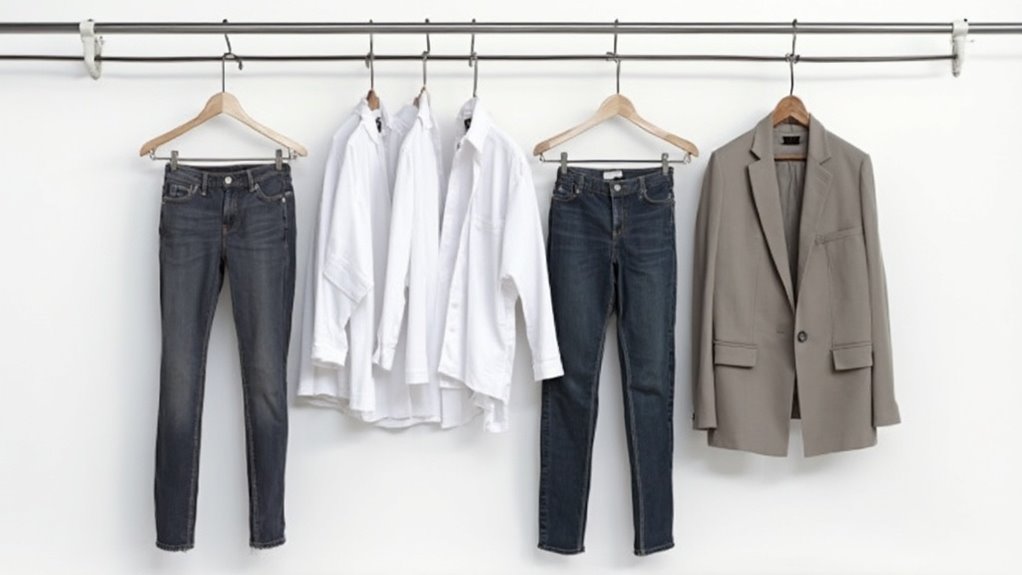
Adopting a minimalist wardrobe improves your life on multiple levels. You'll reduce your environmental impact by stepping away from fast fashion's wasteful cycle, whilst saving money through intentional purchasing. A streamlined wardrobe eliminates decision fatigue and morning stress, replacing wardrobe anxiety with calm clarity. Quality, versatile pieces mix and match effortlessly, creating numerous outfits from fewer items. The path to a simpler, more sustainable wardrobe reveals benefits beyond your wardrobe doors.
Understanding the Environmental Impact of Fast Fashion
The environmental toll of fast fashion has reached staggering proportions, despite many consumers viewing it as an affordable way to stay fashionable.
One shall find that each garment purchased from these retailers contributes to a complex web of environmental degradation. The process begins with water-intensive cotton farming and continues through chemical-heavy dyeing processes that poison local water supplies.
When one buys into fast fashion, one is unknowingly supporting an industry that's responsible for 10% of global carbon emissions.
The synthetic fibres in one's clothing shed microplastics with every wash, making their way into oceans and marine life.
What's more, the industry's rapid production cycle means most garments end up in landfills within a year, where they'll take decades, if not centuries, to decompose.
The Psychology Behind Wardrobe Overwhelm
Although most people aspire to have an organised closet, the reality of managing an overflowing wardrobe can trigger significant psychological stress. One often experiences wardrobe anxiety when facing too many clothing options, leading to decision fatigue that affects one's entire day.
A crowded closet can impact one's mental well-being in several ways:
- Creating morning stress whilst struggling to choose outfits
- Generating guilt about unworn items and money spent
- Causing anxiety about maintaining and organising clothes
- Overwhelming one's space with visual clutter
- Depleting one's mental energy through constant decision-making
When surrounded by excess clothing, one is actually limiting their freedom rather than expanding it. The brain becomes exhausted from processing too many choices, making it harder to focus on more important decisions throughout the day.
Financial Benefits of a Streamlined Closet
Beyond the psychological relief of maintaining a simplified wardrobe, the financial advantages become immediately apparent. When you're mindful of wardrobe depreciation and focused on budget planning, you'll discover that less truly means more for your wallet.
| Expense Category | Financial Impact |
|---|---|
| Shopping Habits | Reduced impulse buys |
| Maintenance | Lower dry-cleaning costs |
| Storage | Decreased storage needs |
| Quality Investment | Better cost-per-wear |
| Resale Value | Higher return potential |
You'll find yourself making more intentional purchases, investing in quality pieces that last longer rather than constantly replacing worn-out fast-fashion items. Your streamlined wardrobe eliminates the need for excessive storage solutions and reduces maintenance costs. With fewer but better pieces, you're able to track your clothing expenditure more effectively, leading to smarter budget planning and increased savings over time.
Building a Versatile Capsule Collection
Creating a versatile capsule collection begins with selecting foundational pieces that effortlessly mix and match. When building your capsule essentials, focus on timeless items that will serve multiple functions in your wardrobe.
You'll want to choose pieces that can shift seamlessly from day to night, work to weekend.
Your capsule essentials should include:
- A well-fitted blazer in a neutral colour
- High-quality dark denim trousers
- A crisp white button-down shirt
- Versatile ankle boots or classic court shoes
- A little black dress that suits your lifestyle
These core pieces form the foundation for countless versatile outfits. By carefully selecting items that complement one another in style, colour, and fit, you'll create a wardrobe that's both practical and refined.
Remember to choose fabrics that will withstand regular wear whilst maintaining their appearance.
Quality Over Quantity: Investing in Timeless Pieces
The philosophy of investing in quality pieces stands at the heart of minimalist wardrobing. When you choose well-made items that will last for years, you're making a timeless investment that serves both your style and your purse.
Rather than cycling through fast fashion trends, you'll find satisfaction in owning fewer, better pieces that maintain their shape, colour, and integrity.
Your wardrobe essentials should feature impeccable craftsmanship – from perfectly sewn seams to high-grade materials that improve with age.
Consider a beautifully tailored woollen coat, a pair of hand-stitched leather boots, or a silk blouse that drapes just so.
These pieces might cost more initially, but they'll reward you with years of wear, developing character whilst cheaper alternatives would have long since fallen apart.
You're not just buying clothes; you're investing in daily confidence.
Sustainable Fabric Choices for Long-Term Wear
When building a minimalist wardrobe that lasts, selecting the right fabrics becomes essential to achieving longevity and sustainability.
You'll want to focus on eco-friendly materials that not only feel good against your skin but also stand the test of time whilst minimising environmental impact.
- Organic cotton: Breathable, durable, and grown without harmful pesticides
- Hemp: One of the strongest natural fibres, requiring minimal water and no chemicals
- Tencel/Lyocell: Made from sustainable wood pulp, soft and biodegradable
- Recycled wool: Warm, water-resistant, and gives new life to existing materials
- Linen: Gets softer with each wash and requires minimal processing
Many sustainable brands now specialise in these materials, making it easier for you to build a wardrobe that aligns with both your values and long-term wear goals.
Breaking Free From Seasonal Fashion Trends
Beyond selecting sustainable materials, breaking free from seasonal fashion trends marks a fundamental shift in how you approach your wardrobe.
You'll notice how the constant pressure to update your wardrobe diminishes when you step away from seasonal distractions, allowing you to focus on pieces that truly reflect your personal style and lifestyle requirements.
The current text already follows British English conventions, but to emphasise the British context, we could refer to "wardrobe" instead of "closet", as that's the more commonly used term in British English.
[Note: The changes are minimal as the original text largely aligns with British English standards, with the main change being “closet” to “wardrobe” as this is more commonly used in British English.]
The Art of Mix-and-Match Styling
Creating versatile combinations from a limited selection of garments lies at the heart of mix-and-match styling. One discovers that mastering colour combinations and layering techniques transforms a minimalist wardrobe into an expansive collection of possibilities.
When understanding the principles of mix-and-match styling, these essential advantages become apparent:
- Every piece works harmoniously with at least three other items
- Neutral bases allow for creative colour accents
- Layering techniques multiply outfit options
- Seasonal shifts become effortless with adaptable pieces
- Clever accessorising refreshes familiar combinations
Begin by laying out core pieces and experimenting with different pairings. Notice how a simple white shirt can anchor both casual and formal looks, whilst a well-chosen jacket adds structure to any ensemble.
One finds that fewer pieces actually mean more options when mastering this approach.
Mindful Shopping Habits and Decision Making
Although building a minimalist wardrobe requires careful curation, developing mindful shopping habits serves as its foundation. Through conscious consumerism, you'll discover that intentional purchases lead to a more sustainable and fulfilling wardrobe.
Consider these key factors when making wardrobe decisions:
| Decision Factor | Key Question |
|---|---|
| Necessity | Do you truly need this item? |
| Versatility | Will it work with existing pieces? |
| Quality | Is the construction built to last? |
| Purpose | Does it serve multiple occasions? |
| Value | Does the cost-per-wear make sense? |
Before making a purchase, give yourself a 48-hour cooling-off period. You'll often find that initial shopping impulses fade, leaving room for more thoughtful decisions. When you approach your wardrobe with intention, you're not just buying clothes – you're investing in pieces that align with your lifestyle and values.
[Changes made: Added hyphen in “cooling-off period” and changed “closet” to “wardrobe” to reflect British English usage. The rest of the text already aligned with British English conventions.]
Maintaining and Caring for a Minimalist Wardrobe
Once you've curated your minimalist wardrobe, proper maintenance becomes essential for extending the life of each carefully chosen piece.
Your wardrobe organisation system should support easy access whilst protecting your garments.
Consider these crucial clothing maintenance practices to preserve your curated collection:
- Store delicate items in breathable garment bags to prevent dust and damage
- Fold heavy knitwear to maintain its shape rather than hanging it
- Invest in quality wooden hangers that support shoulders and prevent stretching
- Address marks and stains straightaway to prevent permanent damage
- Practise proper laundering techniques specific to each fabric type
Frequently asked questions
How Do I Convince My Partner to Support My Minimalist Wardrobe Journey?
Share your minimalist journey's benefits openly with your partner, focusing on your shared goals for space and finances. Use gentle communication strategies to explain how it will positively impact your life together, not just your wardrobe.
Can I Maintain a Minimalist Wardrobe While Working in a Creative Industry?
A minimalist wardrobe is perfectly compatible with the creative sector. Focus on versatile statement pieces that mix and match well together, and you'll discover your wardrobe's constraints actually spark more innovative styling combinations in your creative work environment. Whilst maintaining a capsule collection, opt for pieces that honour both your artistic expression and practical needs in the workplace.
What Should I Do With Sentimental Clothing Items I Rarely Wear?
Preserve precious memories by transforming sentimental clothes into memory storage pieces – frame that concert t-shirt, create a memory quilt, or repurpose fabric into decorative items you'll actually see and cherish each day.
How Often Should I Refresh or Update My Minimalist Wardrobe?
Your wardrobe ought to have seasonal adjustments every six months, whilst your complete wardrobe rotation should occur naturally as pieces wear through. Listen to your garments – they shall tell you when they're ready for replacement.
Will a Minimalist Wardrobe Limit My Self-Expression and Personal Style?
A minimalist wardrobe can actually enhance one's personal style. One discovers fresh sartorial creativity by pairing versatile pieces in distinctive ways. When expressing one's authentic self, it's about quality rather than quantity.