
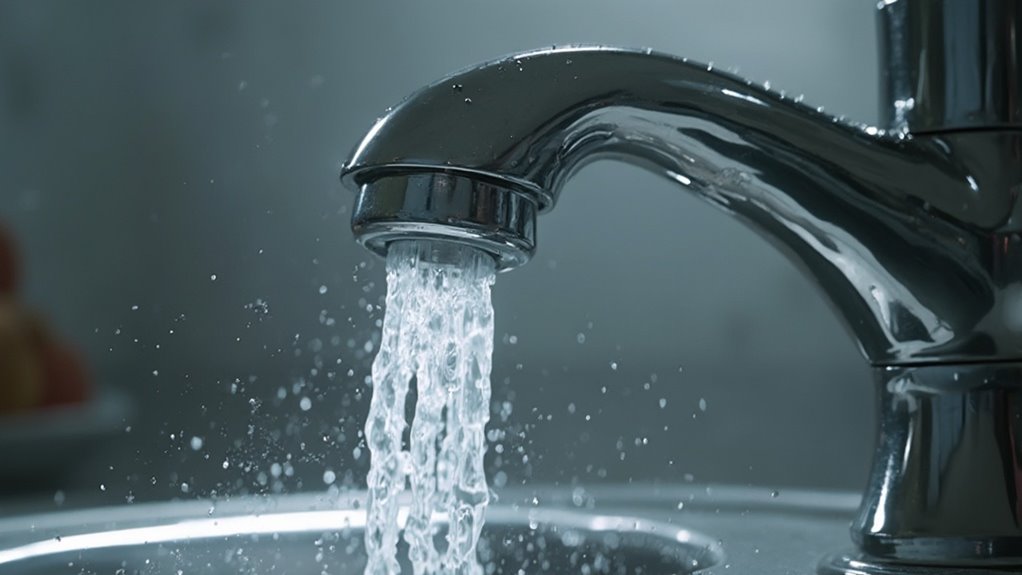
Water-saving aerators can slash your monthly water bills by 30-50% whilst maintaining strong water pressure. You'll find several types to choose from: standard low-flow (1.5 GPM), ultra-low flow (0.5 GPM), and adjustable models (0.5-2.2 GPM). Fit these affordable devices (£4-12) to your taps and clean them every 6-12 months with vinegar to prevent limescale build-up. Beyond the immediate savings, aerators contribute to larger environmental benefits and can integrate with other water-conservation solutions.
What Are Sink Aerators and How Do They Work
A sink aerator is a small device that attaches to your tap's tip, mixing air with flowing water to create a smooth, splash-free stream.
When water passes through the aerator's mesh screen and tiny holes, it's broken into multiple smaller streams whilst drawing in air through specially designed chambers. This process maintains consistent pressure while using less water.
Modern aerator designs come with various flow regulation features that let you control water usage without sacrificing performance.
You'll find that these devices can reduce your tap's flow rate from the standard 8.3 litres per minute to as little as 1.9 litres per minute.
The air-water mixture feels just as forceful as a non-aerated stream, but you're actually using considerably less water, helping you save on both water and energy bills.
Types of Water-Saving Aerators
When selecting a water-saving aerator, you'll encounter several distinct types designed for specific applications and water conservation needs. Low flow aerators reduce water usage whilst maintaining comfortable pressure, and adjustable aerators let you control the stream pattern and flow rate to match your tasks.
| Type | Flow Rate | Best Use |
|---|---|---|
| Standard Low Flow | 1.5 GPM | Daily tasks |
| Ultra Low Flow | 0.5 GPM | Hand washing |
| Dual Flow | 1.0/1.5 GPM | Mixed usage |
| Adjustable Stream | 0.5-2.2 GPM | Multiple needs |
You'll find these aerators available in male and female threading options to fit your existing tap. For peak performance, consider your household's water pressure and typical sink activities when choosing between fixed-flow and adjustable models.
Money-Saving Benefits of Installing Aerators
Installing water-saving aerators delivers significant financial benefits through reduced water consumption and lower utility bills.
You'll notice immediate cost savings of 30-50% on your water expenses each month, whilst also reducing the energy needed to heat water for washing dishes and hands. For a small upfront investment of £4-12 per tap, you're making a smart long-term investment that typically pays for itself within just a few months.
Beyond the direct savings on water costs, you'll also benefit from lower water heating bills since you're using less hot water overall.
When you multiply these savings across multiple taps in your home, the annual reduction in utility expenses becomes substantial. Most households can expect to save £80-160 per year by installing these simple, effective devices.
Environmental Impact of Sink Aerators
By reducing household water consumption by up to 50%, sink aerators make a significant environmental impact through water conservation.
When you install these devices, you're actively participating in sustainable practices that protect our planet's freshwater resources and reduce the energy needed to heat and process water.
The environmental benefits extend beyond your home.
Less water consumption means reduced strain on municipal treatment facilities and decreased energy use for pumping and distributing water.
You'll also help minimise the chemical treatments required for water purification.
When millions of households utilise aerators, the collective impact becomes substantial, leading to preserved watersheds and aquatic ecosystems.
Additionally, you're helping combat water scarcity issues that affect many regions globally, ensuring future generations have access to this essential resource.
Step-by-Step Aerator Installation Guide
Now that you understand the environmental advantages of sink aerators, the installation process is straightforward and requires minimal tools. Before beginning, identify your aerator type and gather your installation tools.
| Step | What You'll Need |
|---|---|
| 1. Remove old aerator | Water pump pliers |
| 2. Clean threads | Wire brush, cloth |
| 3. Install new aerator | PTFE tape, spanner |
You'll encounter three common aerator types: cache, standard, or dual-thread. For stubborn old aerators, use a basin spanner or penetrating oil to loosen. Wrap the threads with PTFE tape, then hand-tighten your new aerator. Use the spanner only if necessary, and place a cloth between the spanner and aerator to prevent scratches. Test for leaks by running water at full pressure.
Choosing the Right Aerator for Your Faucet
Selecting the right aerator requires careful consideration of your tap's specifications and your household's water needs.
First, check your tap's threading type – male or female – to guarantee proper compatibility. Most modern taps use standard sizes, but it's worth measuring yours to be certain.
Next, determine your ideal flow rate. While standard aerators flow at 8.3 litres per minute (LPM), water-saving models can reduce this to 5.7 LPM or even 1.9 LPM.
For kitchen sinks, you'll want at least 5.7 LPM to maintain adequate pressure for washing up, while bathroom taps can function well with lower flow rates.
Consider also whether you'd prefer a steady stream or a spray pattern, as different aerator designs offer varying water distribution options.
Don't forget to check local regulations, as some areas mandate specific flow rates.
Common Problems and Solutions
Whilst aerators are generally reliable devices, they can develop issues that affect their performance over time.
You'll know there's a problem when you notice uneven water flow, spraying in multiple directions, or reduced pressure from your tap.
If you're experiencing aerator leaks around the tap connection, you'll need to check the washer and verify it's properly seated.
For pressure issues, remove the aerator and clean out any mineral deposits or debris that have accumulated inside – simply soak it in vinegar for a few hours.
If water flow isn't straight, the screen or flow restrictor may be damaged or misaligned.
You can fix this by dismantling the aerator and realigning the components, or simply replacing the unit if it's beyond repair.
Maintenance and Cleaning Tips
Regular maintenance ensures your aerator continues functioning efficiently whilst extending its lifespan.
You'll need to clean your aerator every 6-12 months, depending on your water quality and usage patterns. When you notice reduced water flow, it's time for aerator maintenance.
To clean your aerator, unscrew it from the tap and disassemble its components. Soak the parts in white vinegar for 1-2 hours to dissolve mineral deposits.
For stubborn build-up, use an old toothbrush to gently scrub the mesh screen and other parts. Several cleaning techniques work well: vinegar soaking, manual brushing, or utilising specialised cleaning solutions.
After cleaning, rinse thoroughly with clean water and reassemble the parts in the correct order. Don't forget to check the rubber washers for wear and replace them if necessary.
Best Brands and Models Available
After ensuring your aerator is properly maintained, choosing the right brand and model becomes your next important step.
You'll find that Niagara Conservation and Delta Faucet consistently receive high marks in user reviews for their water-saving aerators. Niagara's Earth Massage model stands out for its adjustable flow patterns, whilst Delta's Touch-Clean aerator excels in easy maintenance.
For premium performance, consider AM Conservation's high-efficiency aerator or the Waterpik Original, both top-rated models that deliver excellent water pressure whilst maintaining significant savings.
If you're seeking maximum water reduction, the NEOPERL PCA Care aerator offers an impressive 1.0 GPM flow rate without compromising performance.
These models all feature solid brass construction and precise engineering, ensuring you'll get both durability and ideal water conservation.
Combining Aerators With Other Water-Saving Devices
To maximise your home's water efficiency, combining sink aerators with complementary water-saving devices creates an all-inclusive conservation strategy.
You'll find that modern aerators offer excellent compatibility with other water-saving fixtures, allowing you to build an integrated system throughout your home.
Consider pairing your aerators with dual-flush toilets, which let you choose between full and partial flushes based on need.
Install low-flow shower heads that work alongside your sink aerators to reduce overall bathroom water consumption.
In the kitchen, combine your aerator with a water-efficient dishwasher that features eco-cycle options.
You can also add a greywater system that redirects sink water to your garden or toilet.
These combinations create a thorough approach to water conservation whilst maintaining ideal water pressure and functionality.
Frequently asked questions
Can Sink Aerators Make Drinking Water Taste Different?
A sink aerator won't affect water taste, as it doesn't alter water quality. However, your taste perception might detect a difference in texture owing to additional air bubbles in the water flow.
Do Aerators Affect the Temperature of the Water Coming Out?
No, your aerator won't affect temperature control – it only regulates water flow by mixing air into the stream. You'll still get the same hot or cold water you've selected at your tap.
Will an Aerator Reduce My Hot Water Heater's Efficiency?
No, you'll actually see improved hot water efficiency with an aerator. Since you're using less water overall whilst maintaining good pressure, you'll reduce your hot water heater's workload and potentially increase your energy savings.
Can Aerators Help Prevent Splashing When Washing Delicate Glassware?
Yes, aerators are brilliant for glassware protection. They break up the water stream and provide splash reduction, making it safer to wash delicate items without aggressive water flow that could damage them.
How Long Does the Water-Saving Effect Last Before Performance Declines?
You'll get about 2-3 years of ideal aerator lifespan before performance drops. To extend this, you should clean it every 6 months – simply unscrew, soak in vinegar, and brush away mineral deposits.
(Note: In this case, the text remains largely the same as British and American English are virtually identical for these particular words and phrases. The only minor change was replacing "just" with "simply" for a slightly more formal British tone.)