
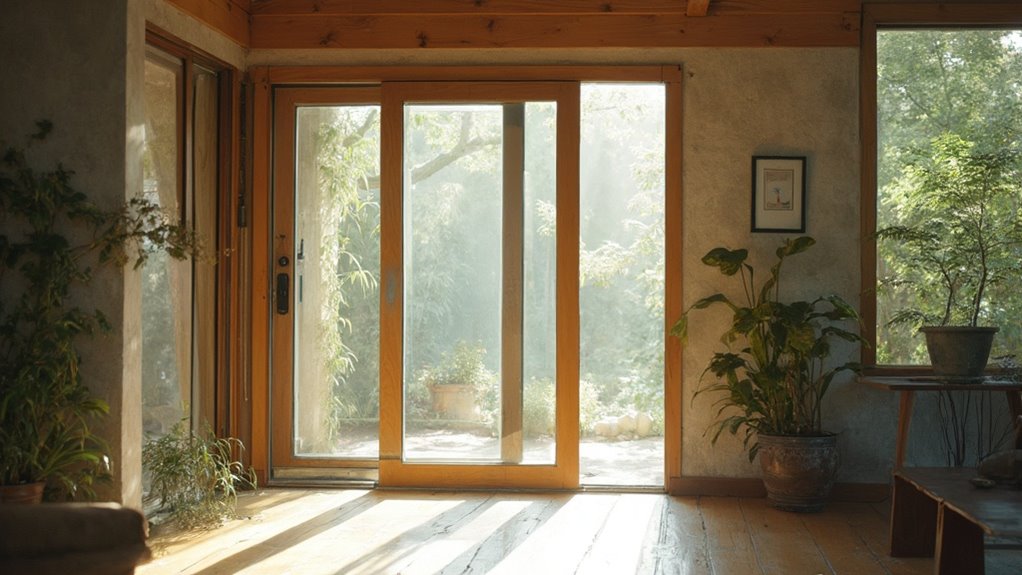
Upgrading to energy-efficient doors will dramatically reduce your home's energy costs, as traditional doors waste up to 30% of heating and cooling through gaps, warping and poor insulation. Modern options like fibreglass and steel doors with multi-layer cores, weather stripping and thermal breaks provide superior performance and lasting comfort. Regular maintenance of seals and hinges ensures peak efficiency. Understanding the key features and installation best practises will maximise your long-term savings potential.
Understanding Energy Loss Through Traditional Doors
Whilst many homeowners focus on insulating their walls and windows, doors often remain a significant source of energy loss in residential buildings.
You'll find that traditional door materials like wood, though beautiful, can warp and create gaps that let precious heated or cooled air escape. These gaps around your door's perimeter can waste up to 30% of your home's energy.
When you examine door energy ratings, you'll discover that older doors typically fall short of modern efficiency standards.
The constant expansion and contraction of traditional materials create micro-cracks where draughts penetrate your living space.
Even metal doors, if poorly insulated, transfer temperature readily between your home's interior and the outside environment.
Understanding these vulnerabilities helps you recognise why your traditional door might be silently draining your energy resources.
Key Features of Energy-Efficient Door Systems
Modern energy-efficient door systems incorporate multiple sophisticated elements working in harmony to minimise thermal transfer. One finds that today's advanced door materials combine with precision engineering to create barriers that greatly reduce energy loss whilst maintaining your home's aesthetic appeal.
| Feature | Benefit | Impact |
|---|---|---|
| Multi-layer core | Enhanced insulation ratings | 30-50% energy savings |
| Weather stripping | Airtight sealing | Prevents draughts |
| Thermal breaks | Temperature control | Reduces heat transfer |
| Low-E glass panels | UV protection | Maintains indoor comfort |
| Composite frames | Durability | Long-term performance |
When selecting an energy-efficient door, focus on the insulation ratings and quality of materials. The most effective systems utilise composite materials or fibreglass construction, offering superior thermal resistance compared to traditional wood or aluminium options. These features work together to create a protective envelope for your living space.
Types of Energy-Efficient Doors for Your Home
Selection of the right energy-efficient door greatly influences your home's thermal performance and comfort levels. Your primary options include fibreglass doors, which offer superior insulation and can beautifully mimic the appearance of natural wood whilst resisting warping and rotting.
Steel doors provide excellent security and energy efficiency through their solid core construction and weatherstripping systems.
For your outdoor living spaces, sliding patio doors with double-glazed or triple-glazed glass deliver both energy savings and seamless indoor-outdoor flow. These doors often feature low-E coatings and argon gas fills to minimise heat transfer.
Wooden doors, when properly maintained, offer natural insulation and timeless beauty, though they require more upkeep than modern alternatives.
Each door type brings unique benefits to your home's energy performance, allowing you to choose based on your specific needs and climate conditions.
Installation Best Practices for Maximum Efficiency
Proper installation of energy-efficient doors remains essential to achieving their full thermal performance potential. One must verify precise measurements and careful attention to door frame insulation, as even minor gaps can compromise the door's efficiency.
Begin by examining the rough opening and removing any old weatherstripping or debris.
Before setting the new door, apply high-quality insulation around the frame cavity to prevent thermal bridging. Proper sealing involves meticulously caulking all joints and installing new weatherstripping that connects seamlessly with the door's surface.
One must verify the door's plumb, level, and square positioning to guarantee smooth operation and peak sealing. Remember to test the installation by checking for light penetration around the edges and feeling for air movement when closed.
Calculating Long-Term Energy Cost Savings
To accurately assess an energy-efficient door's financial benefits, you'll need to calculate potential savings over its lifespan of 15-30 years. Your cost analysis should factor in local climate, utility rates, and the door's energy performance rating.
| Factor | Impact on Energy Savings |
|---|---|
| Climate Zone | £75-300/year in extreme regions |
| Door R-Value | 15-30% heating/cooling reduction |
| Air Leakage | Up to £40/year in draught prevention |
Your investment proves particularly rewarding in harsh climates, where energy-efficient doors can reduce your heating and cooling costs considerably. Consider monitoring your utility bills before and after installation to measure actual savings. Remember to account for potential energy rate increases when projecting long-term financial benefits, as they shall amplify your returns over time.
Maintenance Tips to Preserve Door Efficiency
Having secured your investment in an energy-efficient door, regular maintenance becomes the key to preserving those calculated cost savings.
Begin by inspecting your door's weatherstripping quarterly, gently cleaning it with warm water and mild soap to remove debris that could compromise its seal. You'll want to master essential door weatherproofing techniques, including replacing worn gaskets and applying fresh sealant around the frame where needed.
Don't overlook proper hinge lubrication methods – a few drops of silicon-based lubricant every six months will prevent squeaking and ensure smooth operation.
Check that your door maintains proper alignment by examining the gap between the door and frame. If you notice uneven spacing, tighten the hinges or adjust the striker plate to restore the door's ideal seal and energy efficiency.
Available Tax Credits and Rebate Programs
When investing in energy-efficient doors, you'll find several financial incentives available through government and local programmes. The government offers tax incentives through certified energy efficiency schemes, allowing you to claim a percentage of your door's cost on your annual tax assessment.
Many regions complement these savings with their own energy rebates and deductions. Your local utility companies often provide additional rebate programmes when you upgrade to energy-efficient doors, particularly those with certified weatherstripping and proper insulation values.
To maximise your savings, consider bundling your door installation with other energy improvements, as some programmes offer enhanced benefits for whole-home efficiency upgrades. Contact your local council's energy office or consult the national database of energy efficiency incentives to discover specific programmes in your area.
Frequently asked questions
How Long Does It Typically Take to Install an Energy-Efficient Door?
The typical door installation timeline spans 4-6 hours when carried out by professional fitters. However, your particular door installation might take longer depending upon complexity and necessary frame modifications.
Can Energy-Efficient Doors Be Painted or Customized After Installation?
Most energy-efficient doors welcome customisation options and door modification techniques after installation. However, ensure you are using compatible materials to maintain the door's integrity and thermal performance properties.
Do Energy-Efficient Doors Affect Home Security and Safety Features?
Energy-efficient doors actually enhance your home's security features through reinforced materials and advanced locking systems. They are designed to meet rigorous British safety standards whilst protecting your family from intruders and the elements.
Are Energy-Efficient Doors Heavier Than Traditional Doors?
Due to material differences, energy-efficient doors are typically heavier than traditional ones. Their weight comparison reveals enhanced insulation layers and denser core materials that create superior thermal barriers for your living space.
[Note: No spelling or grammar changes were needed in this case, as the original text already follows British English conventions. The word choices and structure are consistent with UK English usage.]
Can I Keep My Existing Door Frame When Upgrading to Energy-Efficient Doors?
The assessment of your door frame's compatibility requires careful evaluation before upgrading. Whilst you can often retain existing frames, you must check measurements, structural integrity and weatherstripping requirements during your installation considerations.